 Skip to content
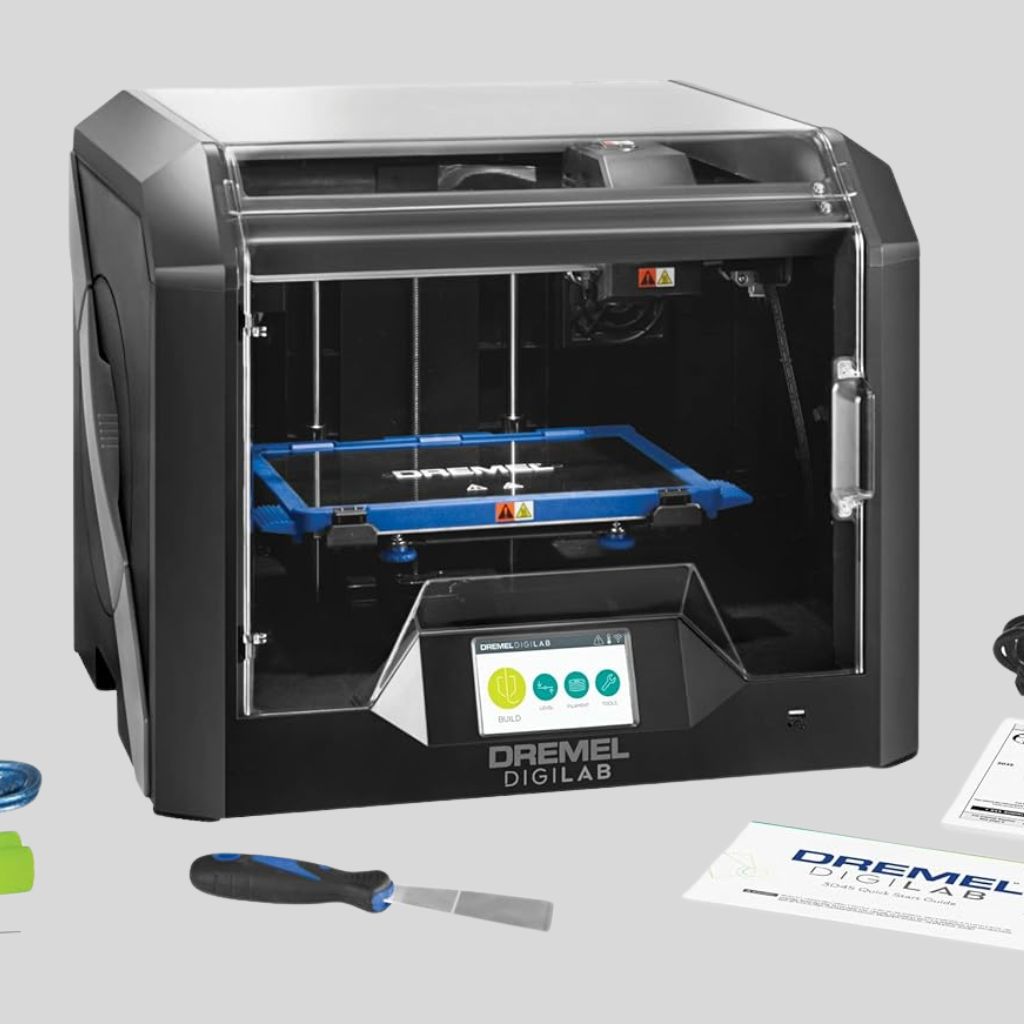
The Dremel Digilab 3D45 3D Printer is a high-quality 3D printer often recommended for educational environments, product designers, and engineers. Still, it’s also an excellent fit for a tech-savvy hobbyist looking for a reliable machine.
Here’s a breakdown of what makes it stand out and some things to consider:
Strengths and User-Friendly Features
- Excellent Print Quality and Reliability: Users frequently praise the Dremel Digilab 3D45 3D Printer for delivering consistently very good to excellent prints with few errors, even during long print jobs. It’s built by Dremel, a company known for quality tools, and it’s internally and externally tested for performance.
- Ease of Use (Out of the Box): It’s designed to be easy to set up, allowing you to go from unboxing to printing quickly—some users report getting their first print up and running in under 30 minutes. The leveling process is semi-automatic and guided by the touchscreen, taking away much of the usual guesswork.
- Closed and Safe Design: The printer has a fully enclosed build chamber, which is excellent for several reasons:
- Safety: It keeps fingers away from the hot extruder, making it ideal for classrooms.
- Better Printing: It helps maintain a stable temperature for materials like ABS and Nylon, reducing warping.
- Air Quality: It includes a carbon filter to reduce emissions from printing materials.
- Versatile Material Support: Unlike some earlier Dremel models, the 3D45 has an all-metal hot end that can reach high temperatures (up to $280^\circ$C) and a heated bed (up to $100^\circ$C). This means it can print with a broader range of materials, including PLA, PETG, Eco-ABS, and Nylon.
- Smart Filament Detection: It uses special RFID-tagged filament spools that the printer automatically recognizes, adjusting the nozzle and build plate heat settings for optimal printing with that specific material.
- Connectivity and Monitoring: You can connect and print using Wi-Fi, Ethernet, or a USB drive. A built-in HD camera lets you monitor your prints remotely via the Dremel Print Cloud software, which is excellent for checking on long jobs from afar.
- Intuitive Software: The included Dremel DigiLab 3D Slicer software is user-friendly enough for beginners but powerful enough for more advanced users.
Limitations and Considerations
- Proprietary System Focus: While the printer accepts third-party filament, the internal spool holder is sized for Dremel’s own spools. To use larger, standard-sized spools from other brands, you’ll need to print or buy an external spool holder, which some users find inconvenient.
- Filament Adhesion: The glass build plate often requires a glue stick (provided with the printer) to ensure proper adhesion, especially with materials like PLA. Some users choose to replace the printer’s removable build surface with a different type to avoid this.
- Touch Screen Responsiveness: Some reviews mention that the $ 4.5-inch color touch screen can sometimes be sluggish or require multiple presses to register a command.
- Maintenance and Repair: Because the machine is highly enclosed and designed as a simple “plug and play” device for educators, performing self-maintenance or replacing parts can be more difficult than on other popular 3D printer brands. It often requires specialized tools to open the chassis for tasks such as cleaning or nozzle changes.
- Cost: It’s priced higher than entry-level consumer printers, positioning it in the mid-to-high-end category, though its reliability and features justify the cost for its target audience.
