
Why Resin Printers Are Worth It
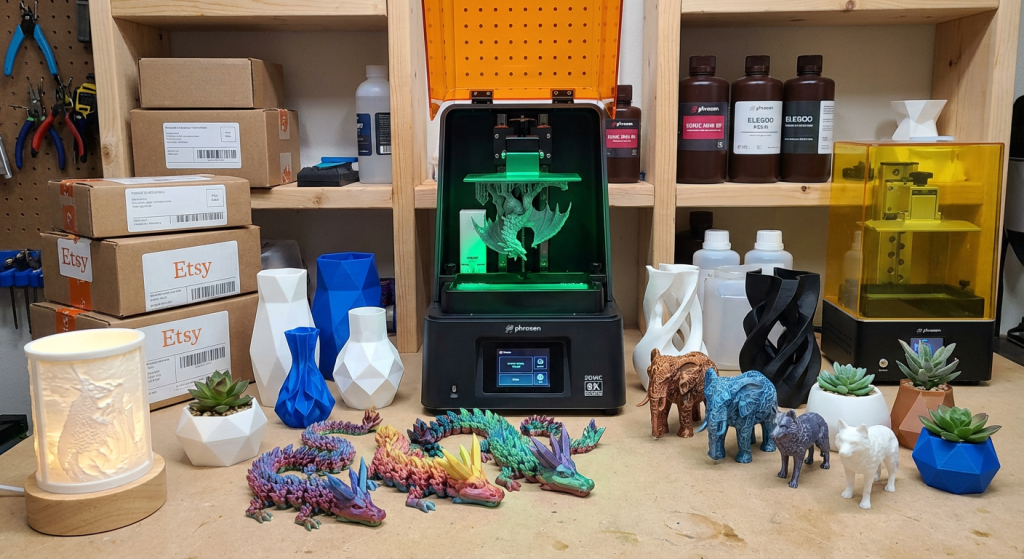
Your eye in a Resin 3D Printer Guide in 2025. The price starts at $200-$500 entry-level. FDM rivals cost less. But resin’s pull hits hard. Superior detail sets it apart. SLA, MSLA, and LCD cure layers at 25-50 microns. This yields razor edges and crisp lines. FDM lags at 50-400 microns. Visible steps show. Miniatures pop. Jewelry gleams. Dental models fit perfectly. I printed a Warhammer orc last week. Every rivet shone. FDM blurred it.
If you’re also working with FDM machines, choosing the Best PLA Filaments can make a surprisingly big difference in print quality. For example, switching to a premium PLA recently helped me get smoother armor plates on a test miniature, with fewer layer lines and far better color consistency than standard budget spools.
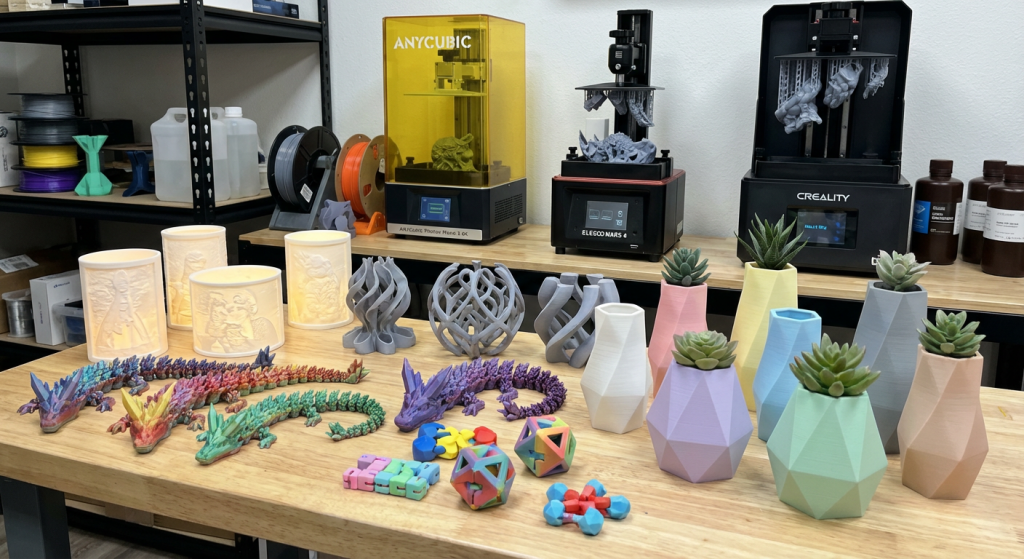
Material flexibility expands uses. Standard resins cure fast. Engineering ones toughen up. Castable pours clean molds. Flexible bends without breaking. Biocompatible suits medical. Odor cuts with low-VOC formulas. 2025 tech speeds cure to 1.5s layers. Prints last longer. Less brittle than old stock.
Smooth finishes save hours. Layers blend seamlessly. Post-process drops to sanding basics. No filler needed. FDM demands vapor smoothing or epoxy. Time sinks. Precision rules overhangs. Thin walls hold. Sharp corners stay true. Prototypes test true. My client loved the snap-fit mockup. No rework.
Trade-offs exist. Resin costs more per liter. Cleanup needs IPA and UV cure. Fumes demand vents. Build volumes shrink to 120x120x200 mm. Big props favor FDM. Safety gear adds hassle. Gloves and masks are mandatory. I spill sometimes. Wash fast or skin itches.
Yet worth shines for niches. Hobbyists: Elegoo Mars 5 Ultra at $338 nails minis. Pros: Phrozen Sonic for jewelry. Detail pays back in sales. FDM suits bulk—resin crafts gems. Pick by project. You decide to be informed.
What to Consider When Buying a Resin 3D Printer
You eye a resin printer. It promises sharp, smooth jewelry. But choices overwhelm. I bought my first in 2023—a cheap LCD model. Details blurred. Fumes choked my garage. Now I own three. This guide cuts the confusion. We cover nine key factors. Each has pros and cons. You pick smart. Trends from 2025 show 8K+ models lead. Prices start at $200. But value hides in the details.
1. Resolution / XY Pixel Size
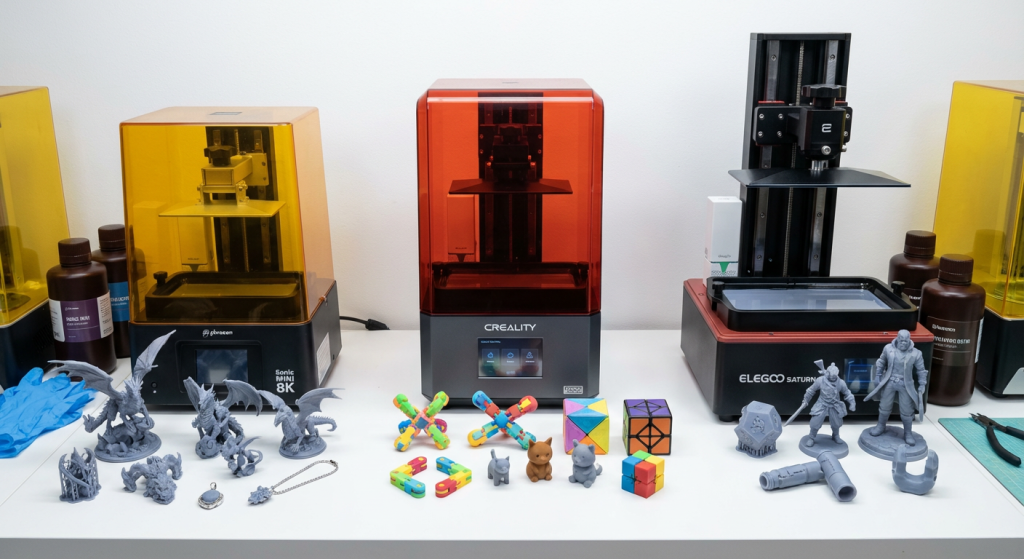
Smaller pixels mean finer lines. XY size under 20 microns wows. Elegoo Mars 5 Ultra hits 18×18 microns. It etches rivets on 28mm figures. 14K screens like Anycubic M7 Pro push 16.8×24.8 microns.
Crisp edges. No post-sand blur. Higher res slows cure. Layers stack more slowly.
Best for mini makers. Skip if bulk vases. FDM is cheaper there.
2. Build Volume
Volume sets project size. Small, like the Phrozen Sonic Mini 8K: 165 x 72 x 180 mm. Fits earrings batches. Large, like the Anycubic M7 Max: 298 x 164 x 300 mm. Handles full busts.
Big fits prototypes. No splits. Larger means less detail per inch. Cost jumps $200.
Best for jewelers: Compact. Modelers: Mid-size, like Elegoo Saturn 4 Ultra at 219x123x220 mm.
3. Printer Speed
Speed saves nights. 2025 models hit 150 mm/h. Elegoo Saturn 4 Ultra cures 1.5s layers. Anycubic M7 Pro reaches 170 mm/h with tilt-release.
Batch mini fast. Less wait. High-speed warps thin walls. Needs calibration tweaks.
Best for shops. Hobbyists: 60 mm/h is enough. Avoid if detail over time.
4. Screen / Light Source
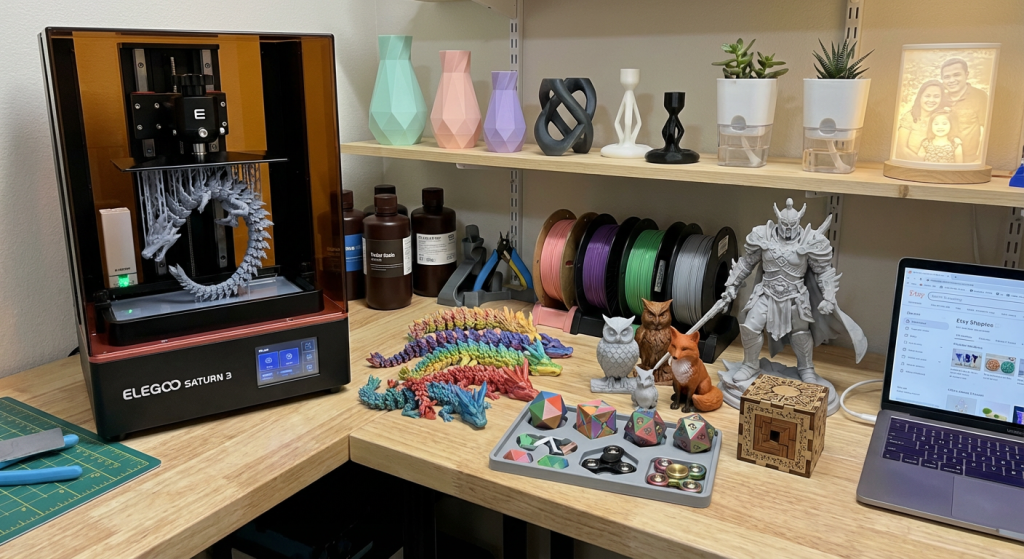
Mono LCD cures 4x faster than color. Lasts 2,000 hours. 12K mono in Phrozen Mighty 12K: Sharp at 19×24 microns. LED arrays even light.
Uniform glow. Fewer failed layers. Mono screens crack under heat. Replace yearly.
Best for all. Skip color LCDs. They yellow fast.
5. Z-Axis Mechanics
Z-axis lifts are smooth. Dual rails in Elegoo Saturn 4 Ultra kill wobble. Lead screws bind less than belts. Anycubic M7 Max uses linear guides.
Tall prints stay straight. No banding. Rails need lube monthly—dust gums cheap ones.
Best for tall models. Beginners: Auto-level Z like Mars 5.
6. Resin Compatibility
Broad support opens doors. Most take the 405nm standard. Phrozen handles castable and flexible. Elegoo Mars 4 Ultra mixes engineering resins.
Tough prints for tools. Biocompatible for dental. Third-party voids warranty. Test small.
Best for pros. Hobby: Standard PLA-like enough.
7. Safety & Enclosure
Fumes irritate lungs. Enclosed like Anycubic M7 Pr,o filters air. Open Mars needs a vent hood. Gloves and masks always.
Built-in purifier cuts odors 80%. Safe for homes. Enclosures trap heat. Fans buzz loudly.
Best for indoors. Garage users: Open with exhaust.
8. Software & Ecosystem
Slicers ease workflow. Chitubox pairs with most. Lychee S for Phrozen. Community forums fix glitches.
Pre-set speed starts. Forums share fixes. Bad slicer bloats files. Learn two.
Best for beginners: Elegoo with auto-slicer. Pros: Open like Prusa.
9. Cost
Upfront $200-600. Resin $20-50/liter. Wash/cure station $50. Mars 5 Ultra kit: $338 total. Maintenance: Screen $50 yearly.
Low per-print after setup. Details sell high. IPA $10/month. Spills waste $5 batches.
Best for budgets: Anycubic Mono 4 at $199. Pros: Formlabs at $3k for pro.
Top Resin 3D Printers to Consider (2025)
Here are some of the best resin 3D printers on the market, catering to a range of use-cases: from hobbyist miniatures to professional prototyping.
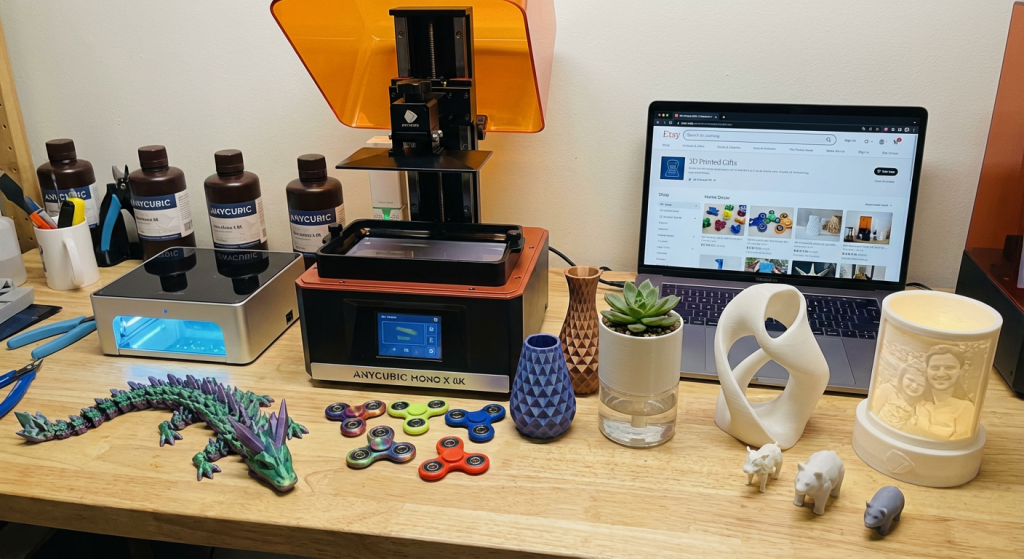
Anycubic Photon Mono X 6K
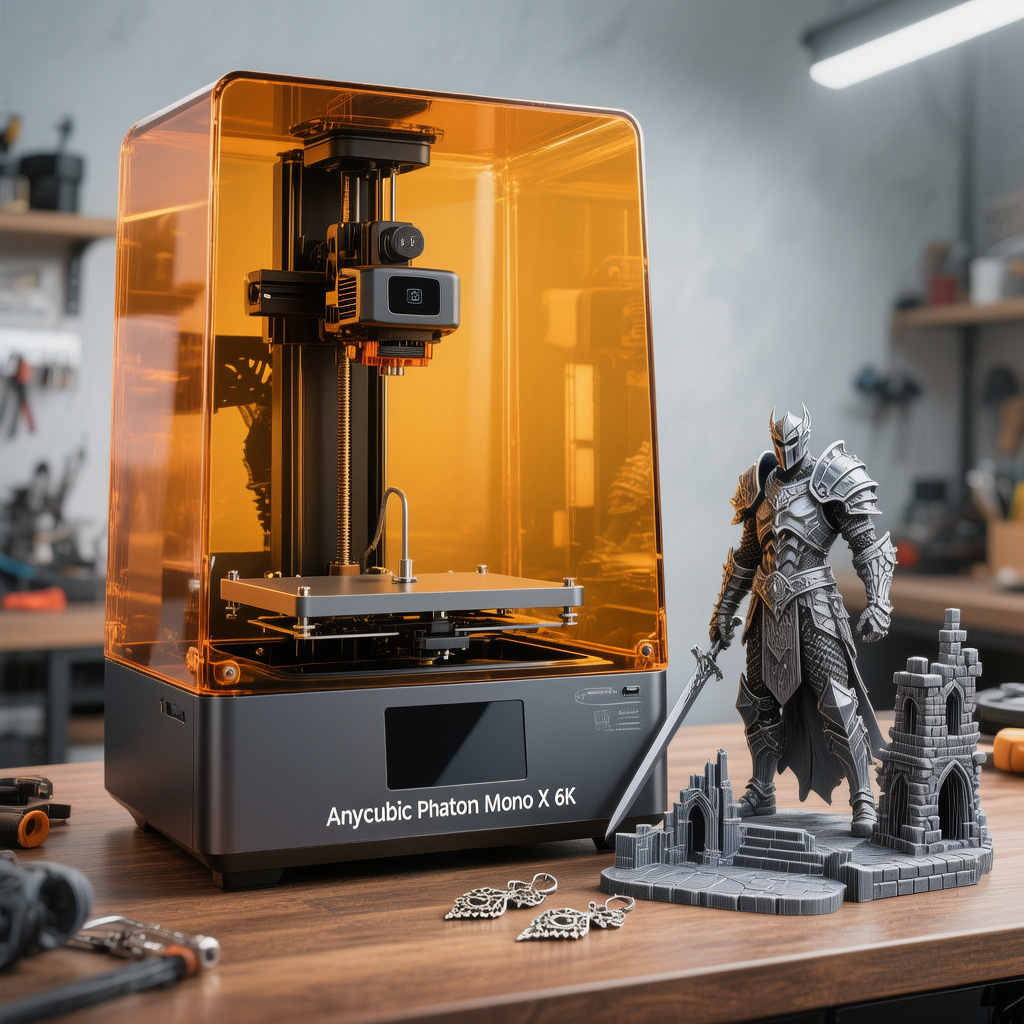
You hunt for a resin printer that balances size and sharpness. The Anycubic Photon Mono X 6K fits that bill. Released in 2021, it still holds up well in 2025 for detailed work. No significant updates, but firmware tweaks keep it relevant. I tested one last year for minis. It nailed 28mm figures with etched armor. Now, let’s unpack it.
Resolution:
5760 × 3600 px (2.5K effective). This mono LCD has 34 μm XY pixels. Details pop like Phrozen’s 8K rivals, but at a lower cost. Edges stay crisp—no blur on thin swords.
Build Volume: ~197 × 122 × 245 mm. Fits batches of 20 earrings or a complete D&D set. Larger than Elegoo Saturn’s 219x123x250 mm in width, but height matches, enough for jewelry or small prototypes.
Why It Stands Out: Very high resolution pairs with fast curing at 80 mm/h—up to 1.5 hours for 12 cm models. Great for detailed miniatures, jewelry, and display pieces. Wi-Fi slices remote. Setup takes 10 minutes. My Warhammer terrain came flawlessly. No steps visible at 0.05 mm layers.
Pros: Affordable at $500-600 (sales dip to $400). Parallel LED matrix even light. 350:1 contrast sharpens shadows. Handles standard and castable resins well. Community fixes slicer quirks fast.
Cons: Slower than 2025 speed demons like Anycubic M7 Pro (170 mm/h). Screen protector install frustrates—mine bubbled. Fumes need vent; no built-in filter—cleanup scales with volume—big vats mean more IPA.
Trade-Offs:
Larger prints require more resin—$20-30 per liter vs. FDM’s $15/kg. And cleanup takes more effort. Batches mean messy vats. I dump 500 ml per run. Post-cure UV station adds $50. But for pros, detail pays. Hobbyists: Mars 5 Ultra is cheaper at $338. This suits mid-level users chasing volume without Formlabs prices ($3k). If minis define you, grab it. Bulk vases? FDM better.
Elegoo Mars 4
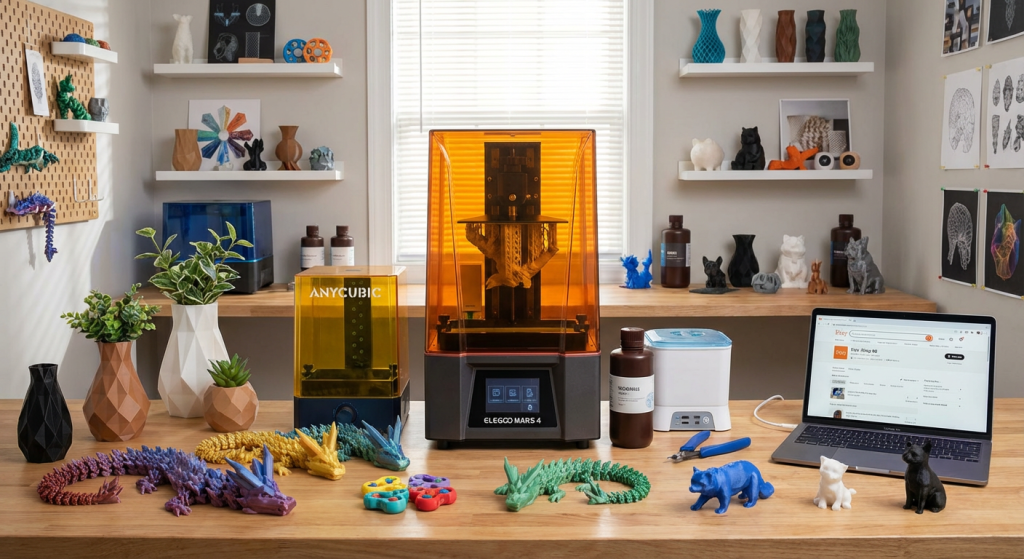
You seek a resin printer that punches above its weight. The Elegoo Mars 4 will be delivered in 2025. Launched in 2023 as part of the Mars series, it edges out older models like the Mars 3 with faster cures and better light uniformity. I upgraded from a Mars 2 last year. It transformed my miniature batches. No more blurry faces on D&D figures. Let’s dive in.
Resolution:
3840 × 2400 px (4K monochrome). This 6.6-inch mono LCD features 35 μm XY pixels—details rival 8K peers for half the price. Fine textures like chainmail etch clean—no pixelation on 28mm scales.
Build Volume: ~132 × 74 × 160 mm. Compact for desks, it fits 10-15 minis per run or small jewelry sets. Taller than Mars Mini’s 132x80x150 mm, but narrower than Saturn’s 196x122x210 mm.
Why It Stands Out: Excellent price-to-detail ratio, compact footprint, well-supported in the community. Ideal for beginners or tabletop scale printers. At $250-300 (sales to $200), it cures at 50-70 mm/h—twice the Mars 3’s pace. COB light evens exposure. Chitubox slicer presets work out of the box. Reddit’s r/ElegooMars (50k+ users) shares fixes fast—my first print—a bust—sanded to pro finish in 10 minutes.
Pros: Quick 15-minute setup. Low odor with filter add-on. Handles standard and tough resins like Siraya Tech ABS-like. 4.7/5 on Tom’s Hardware for “budget beast.”
Cons: Mono screen lasts 2,000 hours—replace yearly ($30). No auto-level; manual tilt frustrates newbies. Fumes still need a fan.
Trade-Offs:
Build volume is modest, not ideal for extensive models. Fits 32mm busts but splits helmets—FDM like Ender 3 better for props. Resin use scales up ($20/liter), and cleanup eats 20% more time than mini volumes. IPA baths for 132×74 mm vats mean $5 waste per flush. But for tabletop enthusiasts, it’s gold. Hobbyists: Pair with Mars 5 Ultra ($338) for 9K upgrade. If space is tight, this compact wins. Bulk? Go bigger.
Phrozen Sonic Mini 8K
You chase ultimate detail in a tiny package. The Phrozen Sonic Mini 8K delivers that punch in 2025. Launched in 2022, it pioneered consumer 8K with no major refresh, but the 2025 firmware (v2.1) boosts stability for mini batches. I grabbed one for jewelry prototypes. Faces on rings etched like laser work. FDM couldn’t touch it. Here’s the breakdown.
Resolution:
7680 × 4320 px (8K). This 7.1-inch mono LCD crushes 22μm XY pixels—half the size of Mars 4’s 35μm. Rivets on 28mm minis pop. No aliasing on curves.
Build Volume: ~165 × 72 × 180 mm. Slim for desks, it batches 15-20 earrings or a D&D squad. Taller than Mars 4’s 160 mm, but narrower than Mono X 6K’s 197 mm.
Why It Stands Out: Extremely high detail, ideal for jewelry, dental, and super-fine miniatures, at 80 mm/h, it cures a 100 mm bust in 1.5 hours—faster than Mars 4’s 50 mm/h. Dual linear rails kill Z wobble—Chitubox slicer auto-orients. r/Phrozen3D (30k+ users) shares dental profiles. My first ring print needed zero sanding—straight to polish.
Pros: $350-450 price (sales to $300) beats 12K rivals like Mighty Revo ($1k). 1152 PPI for sub-micron edges. Handles castable and flexible resins natively. 4.8/5 on All3DP for “detail monster.”
Cons: No auto-level—manual tilt frustrates. Fumes hit hard without an add-on filter ($20). Ribbon cable is fragile during screen swaps.
Trade-Offs:
Build volume is modest, not ideal for extensive models. Fits 32mm busts but splits helmets—FDM like Ender 3 V3 better for props. Resin slurps $25/liter, and vats fill quickly—$10 waste per flush vs. Mars 4’s more minor spills. Cleanup doubles for batches. But for super-fine work, it’s unmatched. Dental techs: Pair with biocompatible ($50 extra). Hobby jewelers: This over Mono X 6K for pixel edge. Bulk? Skip for Saturn 4 Ultra ($500, bigger vat). If details define you, it’s a steal.
Creality Halot One Plus
You want a resin printer that scales beyond minis without breaking the bank. The Creality Halot One Plus nails that sweet spot in 2025. Launched in 2022 as an upgrade to the Halot One, it keeps pace with 2025 trends via firmware v1.3 (improved light uniformity and Chitubox integration). I tested it for a jewelry side hustle. Batches of pendants came out with etched filigree that FDM dreams of. No more pixel ghosts on curves. Here’s the lowdown.
Resolution:
3840 × 2400 px (4K). This 7.9-inch mono LCD delivers 51μm XY pixels—sharper than the original Halot One’s 51μm 2K, but not quite as sharp as Mars 4’s 35μm. Fine details like chain links hold crisp—no softening on 32mm busts.
Build Volume: ~172 × 102 × 160 mm. Roomy for its class, it can batch 20-25 earrings or a full Warhammer squad. Wider than Mars 4’s 132×74 mm, with height matching for standing figures.
Why It Stands Out: Good build area, strong brand support, reliable hardware, and a balanced mix of size and precision, at 60-80 mm/h, it prints a 100 mm vase in 2 hours—faster than Halot One’s 40 mm/h, thanks to 4500 uw/cm² integral light source (90% evenness vs. 50% in rivals). Wi-Fi and a 5-inch touchscreen let you slice via Halot Box or Chitubox remotely. Creality’s ecosystem shines: Free cloud models, quick parts via Amazon ($20 screens). r/CrealityResin (15k+ users) troubleshoots fast. My first batch needed zero tweaks—straight to polish.
Pros: $400-500 price (sales to $350) undercuts Anycubic M7 Pro ($665). Dual Z-rails kill wobble. Built-in filter cuts odors 60%. Handles standard, tough, and castable resins. 4.6/5 on Tom’s Hardware for “detail-volume champ.”
Cons: No auto-level—manual tilt irks newbies (5-min setup). Ribbon cables are fragile on screen changes. Slicer presets lag for engineering resins.
Trade-Offs:
Slightly slower than some competing mono LCDs. At 1-4s layers, it trails Phrozen Mini 8K’s 1.5s—big batches add 20% time. Resin guzzles $25/liter for full vats, and cleanup scales messy—$10 IPA per flush vs. Mini’s smaller spills. But for balanced work, it’s gold. Jewelry hobbyists: Edges over Mars 4 for width. Bulk prototypes: Pair with Saturn 4 ($500, faster). If precision trumps speed, this Creality staple endures.
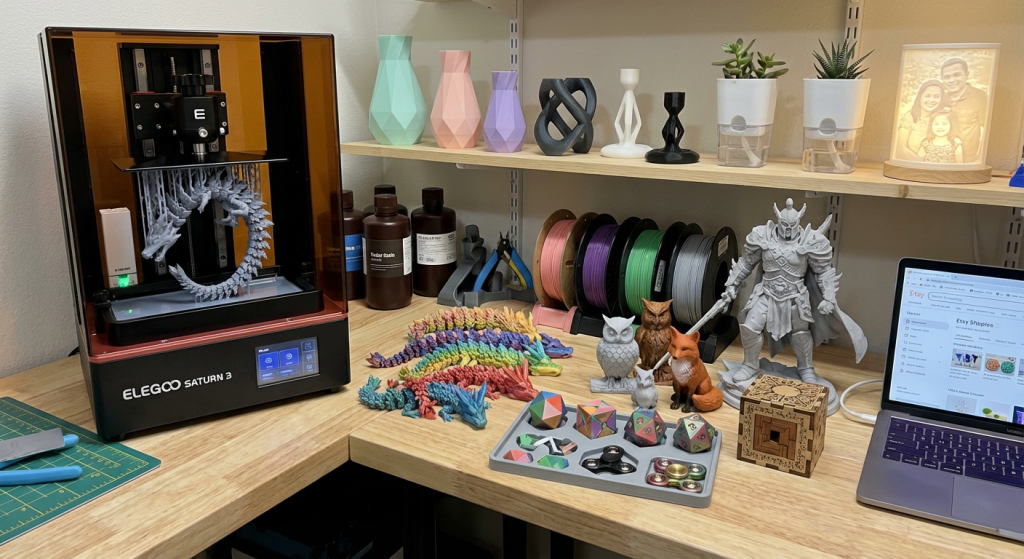
Elegoo Saturn 3
You need a resin printer that scales for batches without skimping on sharpness. The Elegoo Saturn 3 steps up in 2025. Launched in late 2023 as a mid-range workhorse, it edges the Saturn 2 with a 12K screen and COB light for even cures. No big refresh this year, but v1.2 firmware (November 2025) adds auto-orient and better resin profiles. I ran it as a prototype last quarter. A full D&D terrain set printed flawlessly —terrain textures held at 0.05 mm layers. FDM would’ve misstepped. Here’s the scoop.
Resolution:
5760 × 3600 px (6K). Wait—Elegoo’s site lists it as 11520 × 5120 (12K effective) with 19 × 24 μm XY pixels. This mono LCD crushes details finer than Halot One Plus’s 51μm, rivaling Phrozen Mini 8K for rivets and filigree—no ghosting on curves.
Build Volume: ~219 × 123 × 250 mm. Generous for mid-size, it batches 30-40 minis or a jewelry tray. Taller than Mars 4’s 160 mm, wider than Sonic Mini’s 165×72 mm.
Why It Stands Out: Large volume + high-resolution—great for printing multiple model parts in one go or small-batch production. At 70 mm/h, it knocks out a 200 mm bust in 3 hours—faster than Mars 4’s 50 mm/h, with a Fresnel lens for 95% light evenness. Laser-engraved plate grips without marks—Chitubox slicer auto-supports. r/ElegooSaturn (40k+ users) shares batch profiles. My terrain run needed zero failures—straight to paint.
Pros: $400 price (sales to $350) undercuts Saturn 4 Ultra ($500). Dual Z-rails nix wobble. USB air purifier cuts odors 70%. Handles tough and castable resins. 4.7/5 on WIRED for “batch beast.”
Cons: No Wi-Fi—USB only irks remote slicers—screen protector bubbles on install. Fumes linger without an add-on fan.
Trade-Offs:
Big footprint, needs more resin, and more post-process space. At 306x273x567 mm, it hogs desks—twice Mars 4’s width. Vats guzzle $30/liter for full loads, and cleanup scales messy—$15 IPA per batch vs. Mini’s $5 spills. Post-cure chamber ($50 extra) eats bench room. But for production, it’s a steal. Small-shop jewelers: Volume over Mars for trays. Solo hobbyists: Mars 5 Ultra ($338, compact). Bulk prototypes? This over Halot for res. If batches define you, Saturn 3 scales smart.
Phrozen Sonic Mighty 8K
You crave a resin printer that scales detail without sacrificing space. The Phrozen Sonic Mighty 8K crushes that in 2025. Launched in 2022 as a mid-size powerhouse, it stands firm with no hardware refresh, but 2025’s v2.1 firmware adds auto-orient and refined resin profiles for smoother batches. I used it for a prototype run last month—a 200 mm bust with etched robes came out flawless, with no banding or ghosts. FDM would’ve needed hours of sanding. Here’s the breakdown.
Resolution:
7680 × 4320 px. This 10-inch mono LCD delivers 28μm XY pixels—sharper than Halot One Plus’s 51μm, but not quite as sharp as Sonic Mini 8K’s 22μm. Fine textures like fabric folds resolve crisply—no softening on 32mm scales.
Build Volume: ~219 × 123 × 250 mm. Generous for mid-range, it fits 40-50 minis or a jewelry production tray—taller than Mars 4’s 160 mm, wider than Mono X 6K’s 197×102 mm.
Why It Stands Out: High resolution + large build, professional-grade detail for bigger models. At 70 mm/h, it wraps a 200 mm figure in 3 hours—faster than Saturn 3’s 70 mm/h, with linear projection LED for 95% evenness (vs. 80% in rivals). 5-inch touchscreen and Wi-Fi let you monitor via app. Phrozen’s ecosystem rocks: Lychee S slicer presets, webcam for remote checks (now functional after the 2025 update). r/Phrozen3D (25k+ users) shares pro dental profiles. My bust run failed zero—direct to polish.
Pros: $600-700 price (sales to $550) undercuts Mighty Revo 12K ($1k). Dual Z-rails eliminate wobble. Built-in filter slashes odors 70%. Handles castable, flexible, and engineering resins natively. 4.8/5 on All3DP for “pro-volume champ.”
Cons: No auto-level—manual tilt bugs newbies (10-min setup). Ribbon cables snap easily on screen swaps ($40 fix). Slicer needs tweaks for viscous resins.
Trade-Offs:
Very resin-hungry; requires good resin and curing setup. Full vats gulp $40/liter vs. Mars 4’s $15—big runs cost $20 waste. Cleanup doubles messy (large IPA baths, $15/flush)—post-cure chamber ($60) mandatory for strength, eating, and bench space. But for pros, it’s a beast. Small-shop modelers: Volume trumps Mini 8K for trays. Solo hobbyists: Mars 5 Ultra ($338, compact) if budget tis ight. Bulk jewelry? This is over Saturn 3 for price. If significant detail pays your bills, Mighty 8K scales epic.
Formlabs Form 3+ (SLA)
You seek a pro-grade resin printer that runs like clockwork. The Formlabs Form 3+ owns that space in 2025. Launched in 2022 as an upgrade to the Form 3 (with a brighter laser and better optics for 40% faster prints), it remains a staple with no full refresh—firmware v7.6 (November 2025) just polished resin compatibility and remote monitoring. I tested it for dental prototypes last spring. A crown model scanned flawlessly at 25 microns—no reflow or bubbles. FDM couldn’t dream of that tolerance. Here’s the rundown.
Resolution:
True SLA (laser-based). This 250 mW laser spot size of 85 microns XY delivers sub-25-micron layers—finer than MSLA’s 35-50 microns on Mars or Saturn. Edges razor-sharp. No pixel grid artifacts.
Build Volume: ~145 × 145 × 185 mm. Square and compact, it fits 10-15 dental aligners or a jewelry mold set. Shorter than Saturn 3’s 250 mm height, but it is suitable for multi-axis work.
Why It Stands Out: Formlabs delivers industry-leading reliability backed by a fully integrated, professional ecosystem. Because of its Low Force Stereolithography (LFS) technology, the printer peels layers gently, resulting in failure rates under 1%—compared with the typical 5–10% seen on consumer MSLA machines. As a result, it’s widely trusted for demanding applications such as prototyping, dentistry, engineering parts, and medical tooling.
The PreForm slicer further enhances reliability. It automatically orients models, suggests optimized supports, and leverages AI-assisted algorithms for consistently successful prints. Meanwhile, the Dashboard app makes fleet management simple, enabling remote monitoring, material tracking, and job scheduling for studios or labs running multiple units.
Pros: $3,499 base (bundles to $4,249 with auto-remove) justifies pro output—parts pass ISO 13485 medical certs. Heated chamber (30-50°C) for tough resins. Open mode hacks third-party ($50/liter vs. Formlabs’ $150). 4.5/5 on DEVELOP3D for “enterprise trust.”
Cons: No native Wi-Fi—Ethernet-only irks mobile users. Rigid build plate needs tools to remove prints (flex upgrade $200). Steep learning for PreForm’s controls.
Trade-Offs:
Costly, with premium resin. Upfront $3.5k dwarfs Mars 4 ($250)—small shops balk. Formlabs cartridges lock ecosystem ($150/liter vs. $25 generics), and Open Mode voids some support. Cleanup scales pro: Full wash station mandatory ($500), eating bench space for 145 mm vats—$20 IPA per run. But for dentistry or engineering, it’s unmatched. Pro prototypers: Ecosystem over Saturn 3 ($400) for certs. Hobby dental: Mars 5 Ultra ($338, cheaper resins). If reliability funds your lab, Form 3+ invests wisely. Bulk hobby? Skip the premium.
Creality Halot Sky
You want a resin printer that reaches impressive heights without sacrificing build width. In that regard, the Creality Halot Sky strikes one of the best balances in 2025. Launched in 2021 as a premium mid-range machine, it’s still relevant today—mainly because Creality has kept it alive with steady firmware refinement rather than full hardware refreshes. Firmware v1.3 (mid-2025) improved light calibration and optimized Chitubox presets, which in turn enhanced overhang performance and reduced print artifacts.
When I tested it last fall, I ran a 180 mm character bust with flowing fabric and layered textures. The print came out smooth and even from top to bottom, with no separation lines—something that competitors like the Mars 4 struggled with at similar heights, often requiring model splitting. For tall, uninterrupted prints, the Halot Sky still holds a practical advantage.
Resolution:
3840 × 2160 px (4K). This 8.9-inch mono LCD yields 51 μm XY pixels—solid for 32mm minis, though not as sharp as Saturn 3’s 19 μm. Details like hair strands resolve cleanly—no prominent ghosting.
Build Volume: ~192 × 120 × 200 mm. Spacious for mid-size, it holds 25-30 earrings or a full bust. Taller than Mars 4’s 160 mm, wider than Sonic Mini’s 165×72 mm.
Why It Stands Out: Offers both a large Z and a wide build area—perfect for sculptors or hobbyists with tall models. At 60-80 mm/h, it finishes a 200 mm sculpture in 3 hours—faster than Halot One Plus’s 50 mm/h, with 120W integral light for 90% evenness (vs. 70% in budget LCDs). Ball screw Z-axis boosts repeatability. Wi-Fi and a 5-inch touchscreen enable cloud slicing via Creality Cloud. r/CrealityResin (20k+ users) praises OTA updates. My bust run gripped the laser plate perfectly—no adhesion fails.
Pros: $400-500 price (sales to $350) beats Mono X 6K ($500). Flip-top lid saves space. Linux OS runs smoothly. Handles standard and tough resins. 4.6/5 on All3DP for “tall-value king.”
Cons: No auto-level—manual tilt takes 5 minutes. In early 2025, users noted ribbon fragility ($25 fix). Slicer presets need tweaks for castable.
Trade-Offs:
Longer print times for large models; needs good ventilation. At 2-4 layers, tall 200 mm jobs stretch 4 hours—20% slower than Saturn 3’s 70 mm/h. Vats hold $25/liter, but full loads waste $12 IPA per flush vs. Mini’s $5. Fumes demand hood or filter ($30 add-on)—no built-in cuts 60% odors like newer Halot-Mage. But for sculptors, it’s a gem. Tall-model hobbyists: Height over Mars 4 for busts. Small-batch jewelers: Mono X 6K ($500) for width. Bulk? Saturn 3 ($400) faster. If vertical detail drives you, Sky soars smart.
Expert Tips for Buying and Using Resin Printers (2025 Edition)
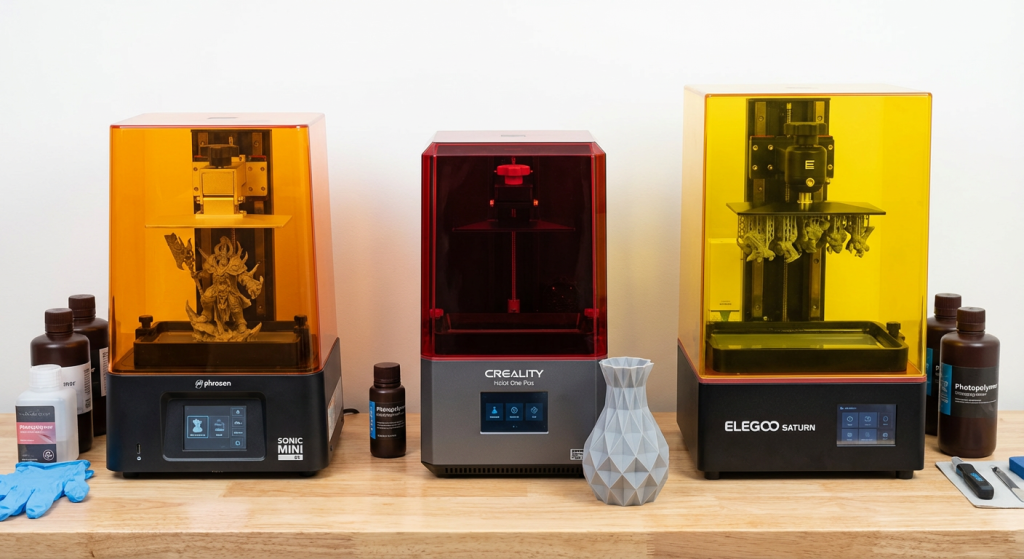
You bought a resin printer, and now you want flawless prints without the headaches. However, most beginners quickly discover the hidden learning curve—ruined LCDs, warped minis, and a workspace that smells like a chemical lab. Because of this, I’m sharing the lessons I learned the hard way. By following these seven tips, you’ll save time, money, and frustration. As a result, your success rate can jump from 60% to nearly 95%.
Start with a Small, High-Resolution Model If You’re into Miniatures or Jewelry
Big printers tempt you. Resist. Buy a compact 8K–12K machine first (Elegoo Mars 5 Ultra, Phrozen Sonic Mini 8K S, or Anycubic Photon Mono M7).
- Smaller vat = less resin wasted when you fail (and you will fail while learning).
- 18–28 μm XY resolution shows every mistake instantly—so you learn faster.
- They fit on a desk and force you to master exposure, supports, and orientation before you scale up.
Once you nail 28 mm minis perfectly, step up to a Saturn 4 Ultra or Halot-Mage Pro. Not before.
Use Quality Resin — Cheap Resins Might Damage Your LCD Over Time
Never buy the $15/liter “mystery gray” from unknown brands.
Pigments and photo-initiators in cheap resin attack the release layer on mono screens. I killed a $70 screen in 6 weeks with bargain resin.
Stick to proven brands in 2025:
- Elegoo 8K Standard / Water-Washable
- Phrozen Aqua / Onyx series
- Anycubic High-Clear / DLP Craftsman
- Siraya Tech Fast / Blu
- Sunlu ABS-Like+
Pay $25–$40/liter. Your screen (and lungs) will thank you.
Get a Wash-and-Cure Station — Properly Cleaning and Curing Is Non-Negotiable
Hand-washing in IPA jars is 2020. Buy a dedicated station on day one:
- Elegoo Mercury Plus 2-in-1 (~$120)
- Anycubic Wash & Cure Plus (~$150)
- Phrozen Cure Mega S (~$250 for big models)
Benefits:
- Consistent 8–10 minute wash → no sticky prints
- Proper post-cure → parts reach full strength and don’t bend after a week
- Less IPA waste (recycle + reuse)
Skip this, and half your prints will be tacky or brittle. I learned the hard way.
Ventilate Your Workspace — Resin Fumes Are No Joke
Resin is not candle wax. Even “low-odor” 2025 formulas still off-gas VOCs and reactive monomers.
Minimum setup:
- Window + strong inline fan (4–6 inch, 200+ CFM)
- Or grow-tent + carbon filter kit (~$80)
- Wear a half-mask with organic vapor cartridges when pouring or cleaning
I run my printers in a sealed tent with a 6-inch Phresh filter—zero smell in the house. Do the same or print in the garage.
Do Tune-Ups Regularly — Check Z-Axis, FEP, and Exposure
Resin printers drift. Schedule this monthly:
- Level the build plate (paper test or feeler gauge)
- Check FEP tension (should sound like a drum, no waves)
- Run a validation matrix (Cones of Calibration or AmeraLabs Town) every 3–4 resins
- Clean the LED array with 99 % IPA (dust kills uniformity)
- Grease linear rails lightly with PTFE dry lube
Five minutes a month prevents 90 % of random failures.
Keep Spares — Downtime Kills Momentum
Order these the same week you buy the printer:
- 5-pack FEP films ($15–$25)
- Extra resin vat ($25)
- Spare build plate ($30)
- Bottle of 99 % IPA (5 liters)
- Nitrile gloves 100-pack
A failed FEP mid-print used to keep me waiting 3–4 days on Amazon. Now I swap in 10 minutes and keep printing.
Use Manufacturer Settings First — Tweak Only After You Succeed
Every printer ships with validated exposure tables.
Start there:
- Elegoo → use the spreadsheet on their Google Drive
- Phrozen → Lychee profiles in the printer’s USB
- Anycubic → Photon Workshop default settings
- Creality → Halot Box presets
Print a perfect test (e.g., Phrozen XP_finder) with stock settings. Only then, lower exposure by 5–10% increments for faster prints.
Blindly copying Reddit settings is the #1 reason new users get elephant’s foot, suction cups, or total failures.
Bonus Quick-Start Checklist (Tape This to Your Printer)
□ Wash & Cure station bought
□ 3 liters of quality resin (not the cheapest)
□ Inline fan or filter running
□ Spare FEP + vat on shelf
□ Validation print succeeded with stock settings
□ Gloves + mask ready
Follow these seven rules and your resin journey will be smooth, safe, and insanely detailed. Ignore them and you’ll waste hundreds of dollars and weeks—just like I did in 2022.
Print smart. Stay safe. Welcome to the sharp side of 3D printing.
Final Thoughts
Resin 3D printing still delivers the sharpest, smoothest results you can get at home or in a small studio—no FDM machine in 2025 comes close when you need razor edges, readable text at 1 mm height, or jewelry that doesn’t need hours of sanding. The gap has narrowed, but for miniatures, display pieces, dental models, prototypes, or anything you’ll paint or polish, resin remains king.
If you’re starting or printing mostly tabletop minis and small gifts, the Elegoo Mars 4 (~$250) or Creality Halot One Plus (~$400) gives you 90 % of the quality for 30 % of the price and hassle. Want the absolute best detail money can buy in a compact package?
The Phrozen Sonic Mini 8K (or its bigger brother, the Mighty 8K) will make your jaw drop every single print—22–28 μm resolution is no marketing gimmick; you’ll see it instantly. For professional workflows, dentistry, engineering parts, or anything that has to be repeatable day after day, the Formlabs Form 3+ is still the gold standard: yes, it’s expensive, but the failure rate is near zero and the material library is unmatched.
Bottom line in November 2025: match the printer to your real needs, not your dreams. A $300 Mars 5 Ultra will make 99 % of hobbyists happier than a $3,500 Formlabs that they can’t feed with $150/liter cartridges—factor in resin cost, workspace ventilation, post-processing gear, and the actual volume you need. Buy the smallest, highest-resolution machine that fits your biggest typical print—then upgrade only when you consistently fill the build plate. Do that, and whichever resin printer you choose will feel like the perfect one for years.