 Skip to content
Anycubic PLA filament is a popular material for FDM 3D printing, known for its ease of use and versatility. Derived from renewable plant-based materials, such as cornstarch and sugarcane, PLA (Polylactic Acid) is a biodegradable and environmentally friendly option. Anycubic offers various types of PLA to suit different needs, including standard PLA, PLA+, and High-Speed PLA.
Anycubic PLA Filament delivers high-quality, durable, and vibrant 3D prints. Perfect for hobbyists and professionals seeking reliable results.
Related internal pages:
- anycubic-smart-printing-filament-pack/
- anycubic-high-speed-pla-filament/
- anycubic-petg-filament/
- anycubic-creative-filament-pack/
- anycubic-pla-basic-refill/
Product Features
● Double the Toughness
● Bending Modulus: 3980±360MPa
● Resilient Against Clogging
● Easy to Print, Beginner-Friendly
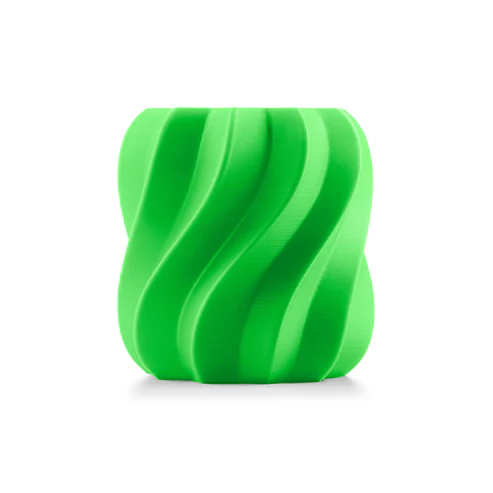
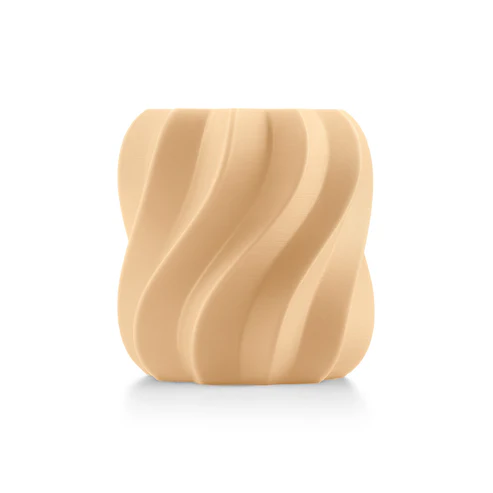
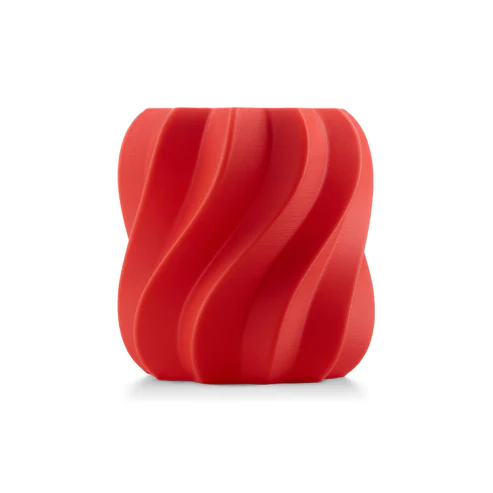
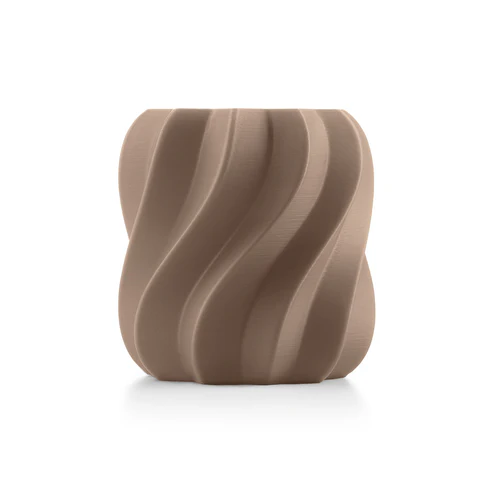
● Eco-friendly & Vibrant Colors
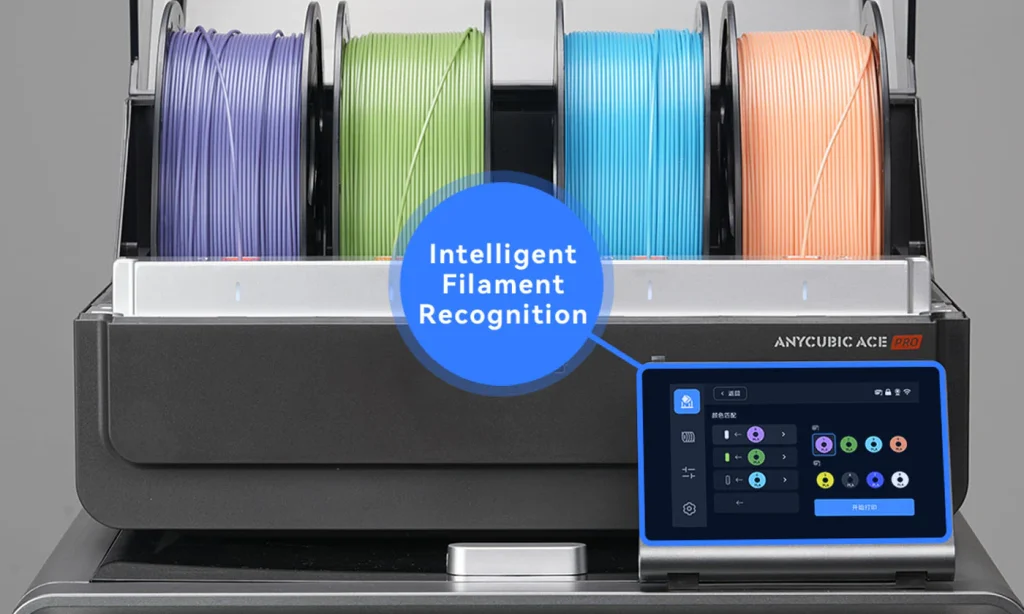
● Boosting Efficiency with Intelligent Identification
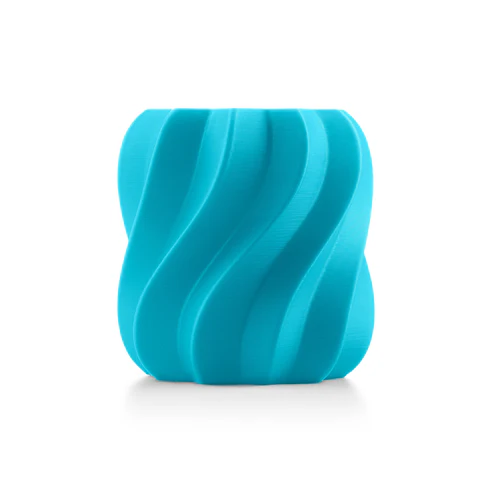
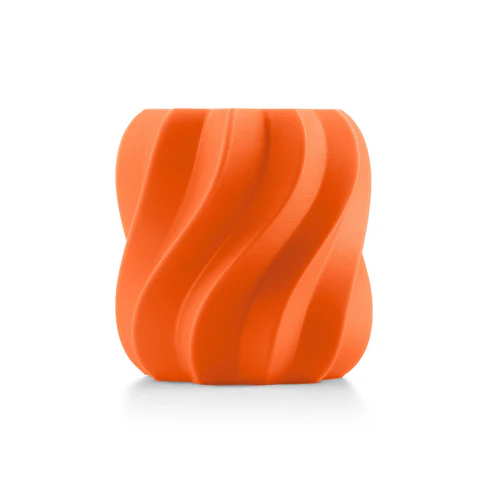

Key Insights
- Ease of Printing: Anycubic PLA is celebrated for its low melting point, minimal warping, and lack of strong odors, making it an excellent filament for beginners.
- Quality and Consistency: The filament maintains a strict diameter tolerance of ±0.02mm, ensuring consistent extrusion and preventing common issues like nozzle clogs. The spools are neatly wound, which helps to avoid tangles and printing failures.
- Range of Materials: Anycubic’s PLA portfolio includes various types to meet diverse needs:
- PLA Basic: Ideal for general-purpose printing, prototypes, and decorative items.
- PLA+: An upgraded version with improved toughness and impact resistance, suitable for functional parts and models that require greater durability.
- High-Speed PLA: Specifically formulated with enhanced fluidity to support printing speeds up to 500 mm/s or higher on compatible printers without sacrificing print quality.
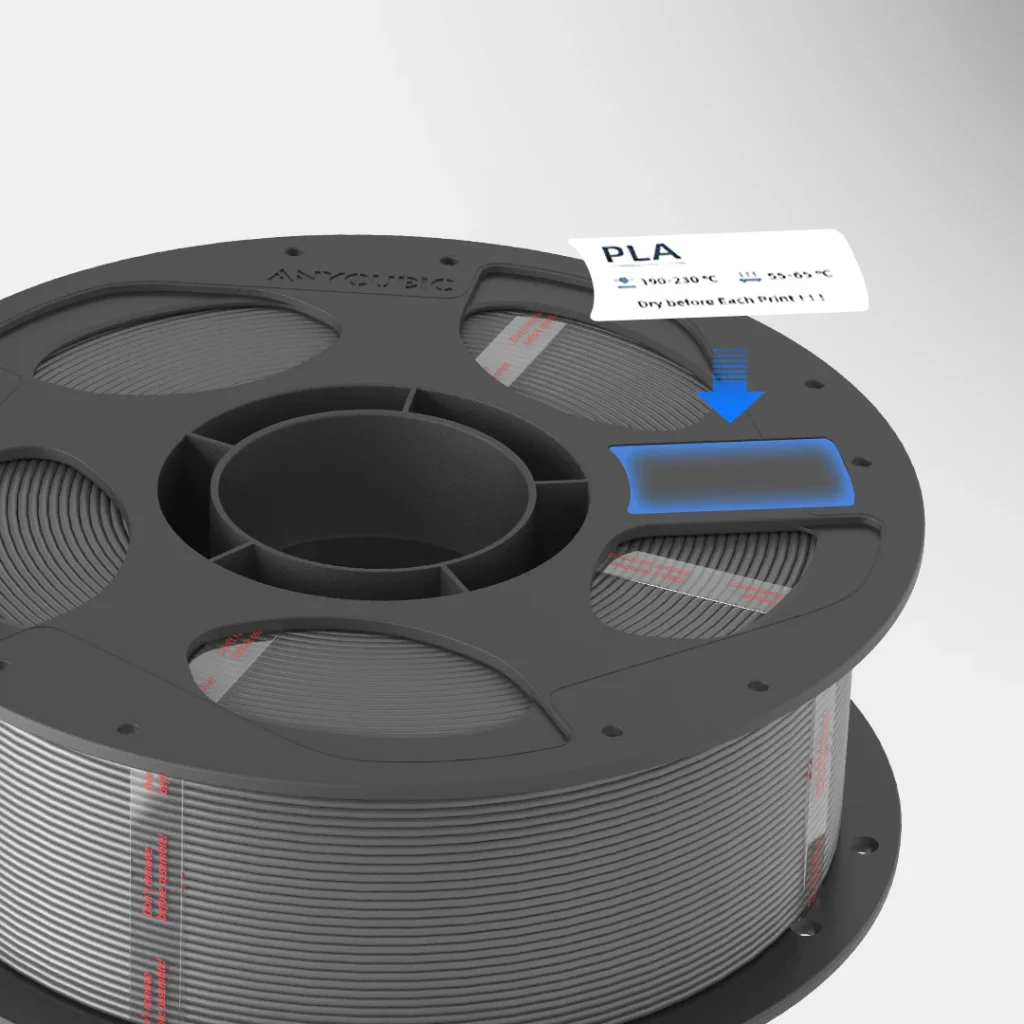
- Intelligent Identification: Some Anycubic filaments feature a smart chip that enables automatic printer setting optimization on compatible machines, such as the Kobra 3 series, simplifying the printing process.
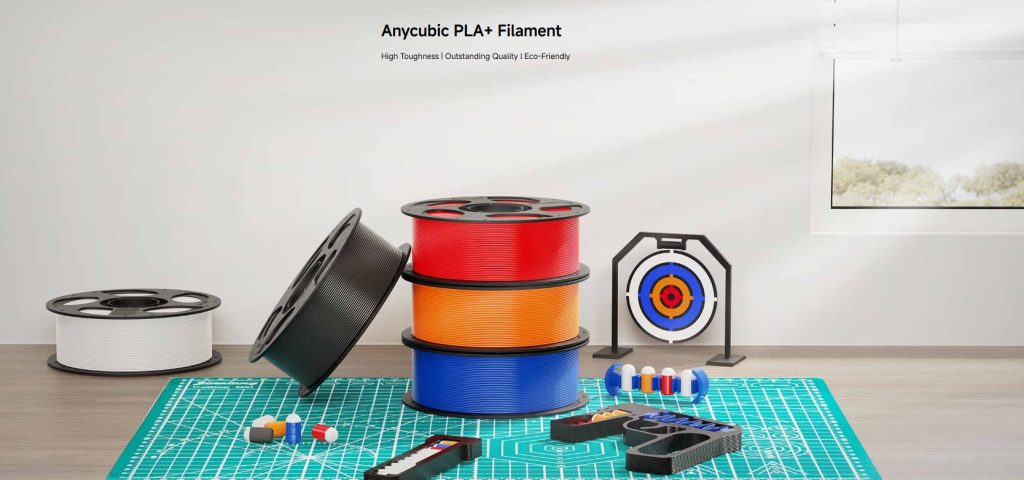
Double the Toughness
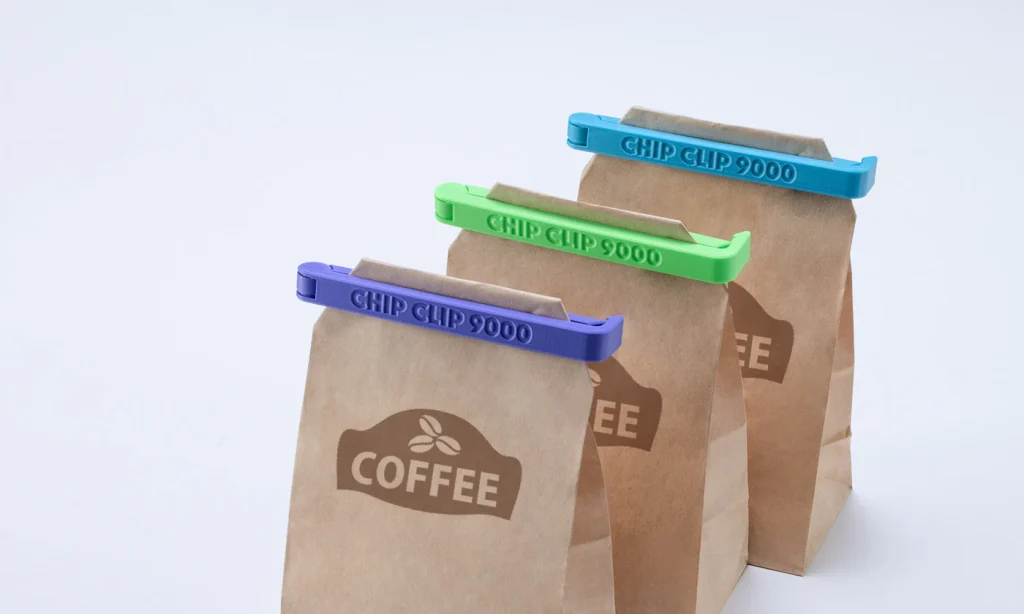
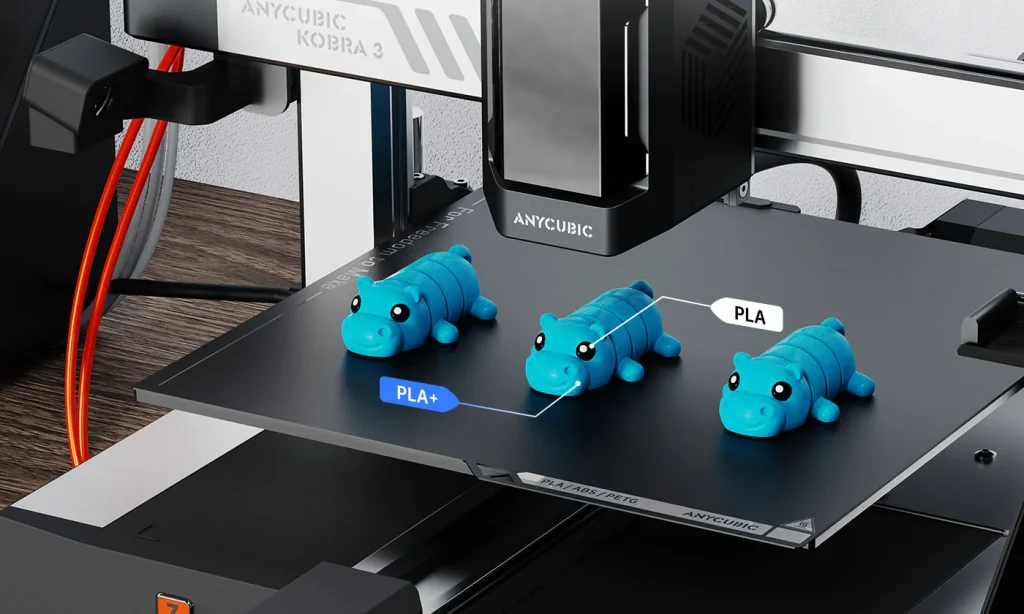
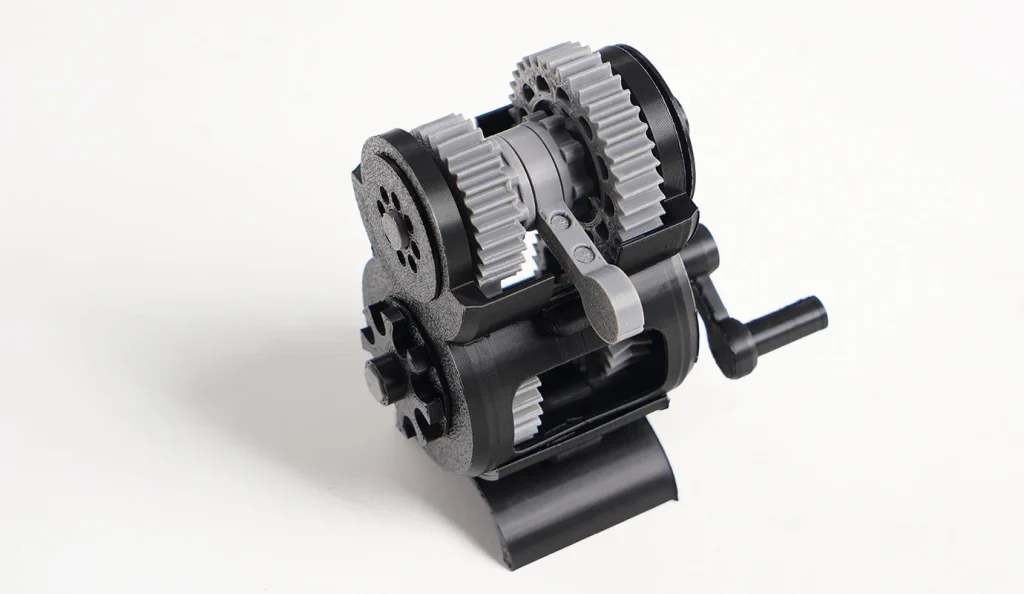
With twice the toughness of standard PLA, PLA+ filaments deliver superior impact resistance and structural stability— even under stress. These high-performance materials retain dimensional accuracy while extending the lifespan of 3D-printed parts, making them ideal for engineering components and load-bearing parts.
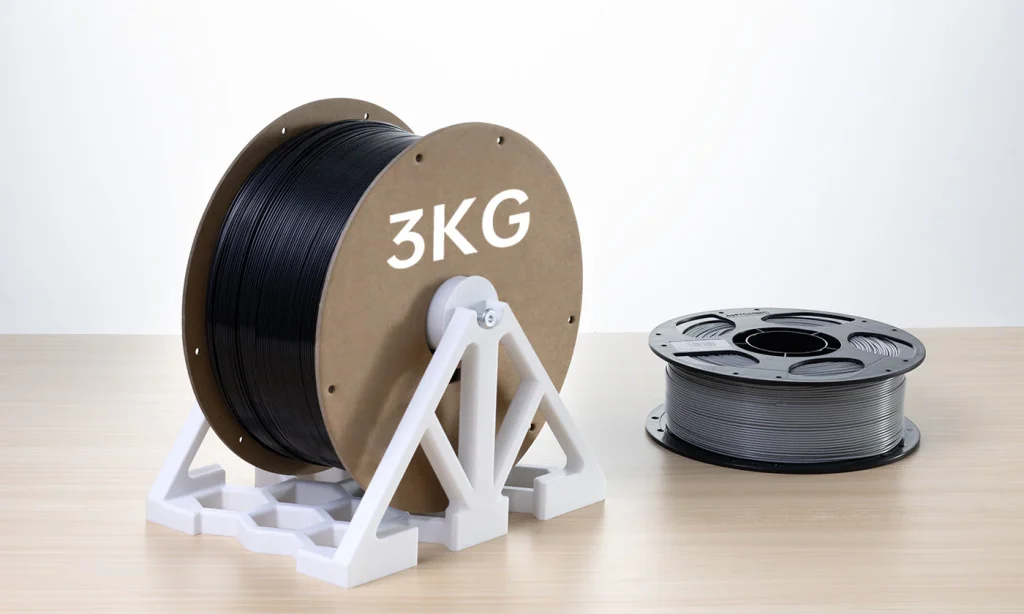
3980+360MPa
Bending Modulus
Silky, Smooth
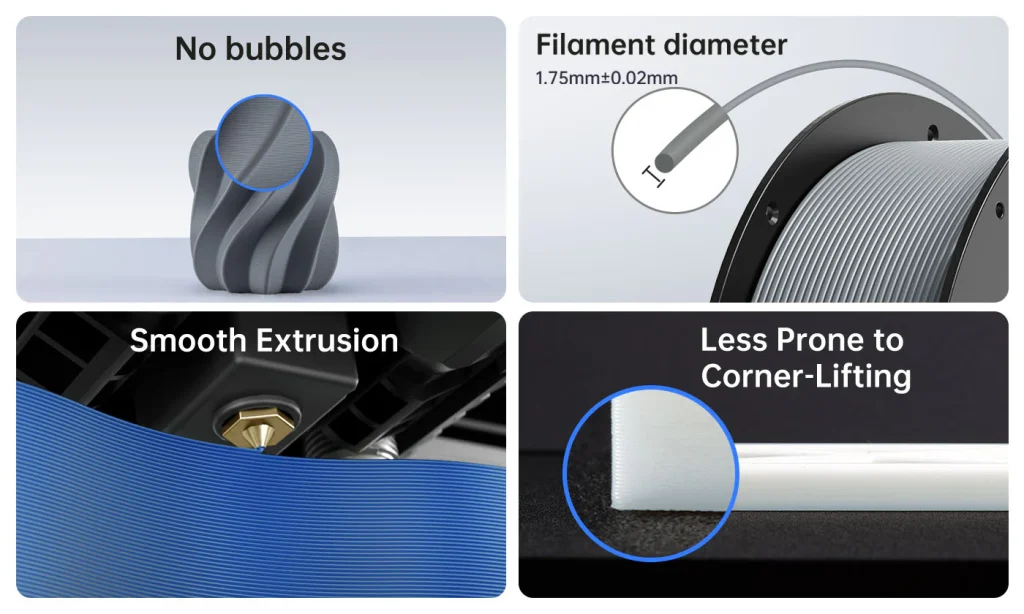
Made from premium raw materials, the filament is free of bubbles and impurities, with a diameter tolerance of<±0.02mm. The consistent and even extrusion effectively minimizes nozzle clogging, producing pristine and smooth surfaces.
Just so Easy to Print
Compatible with standard PLA printing parameters, even a beginner can easily achieve a consistent result after reloading a new spool of Anycubic filament.
Eco-friendly
The Anycubic PLA+ is refined from an eco-friendly, plant-based substance, resulting in lower odor and the absence of irritating emissions during printing.

Vibrant Colors
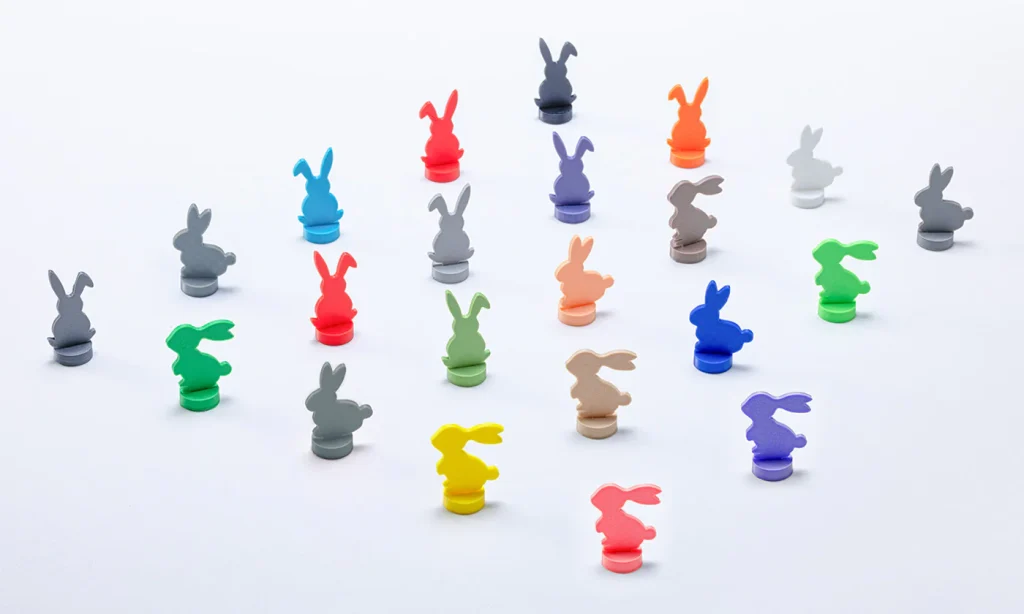
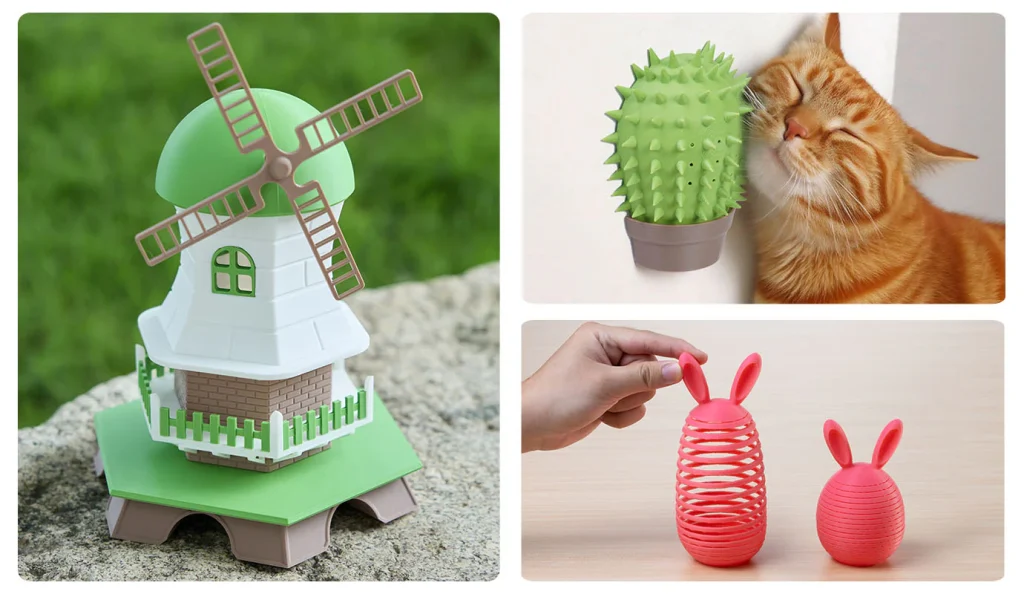
Similar to PLA filaments, Anycubic PLA+ offers a broad range of colors, making it perfect for educational purposes, design, and creative projects.
Boosting Efficiency with Intelligent Identification
The filaments feature intelligent identification chips that integrate seamlessly with the ACE Pro, enabling automatic identification of printing information and enhancing the overall printing experience.
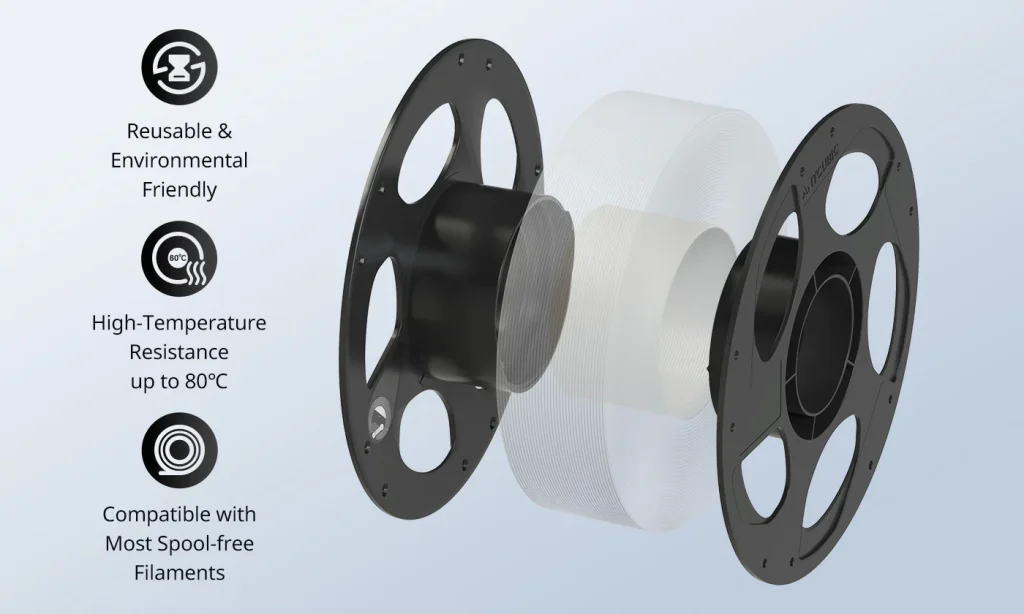
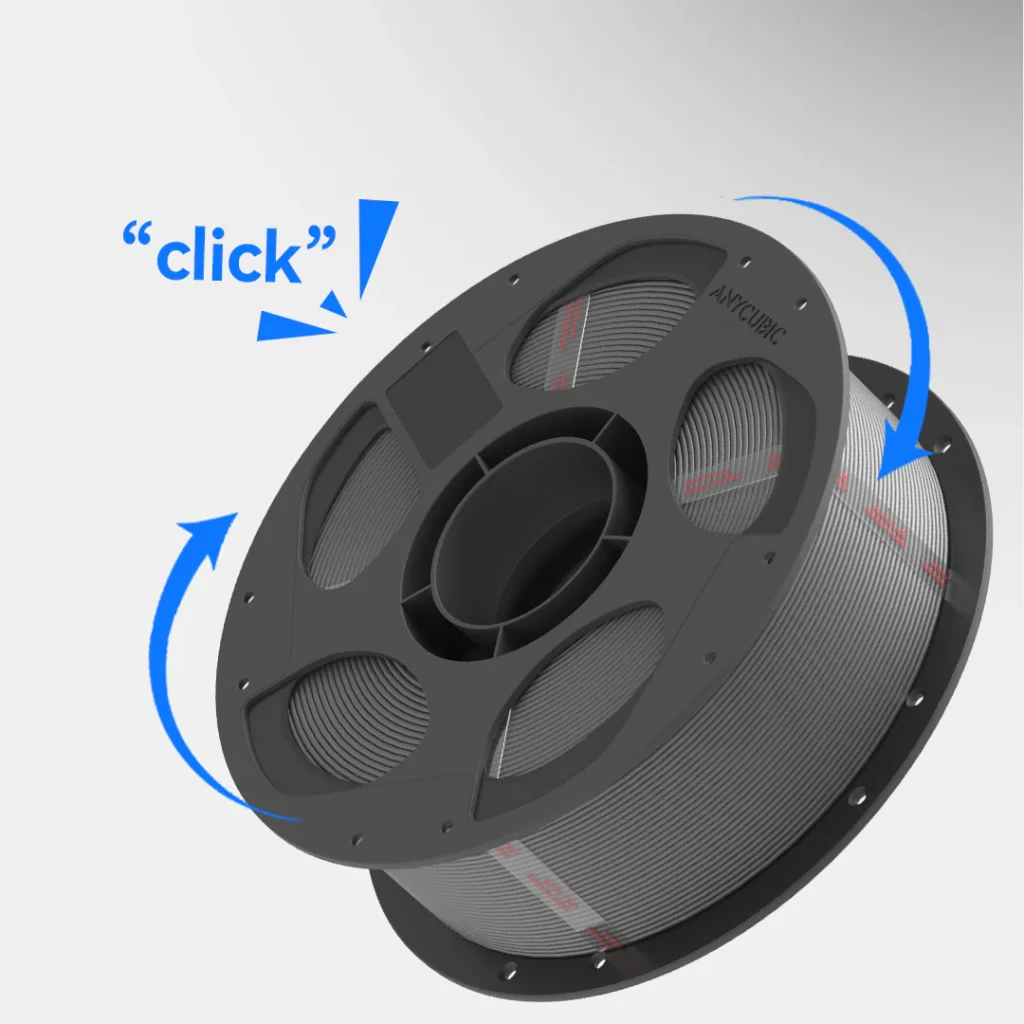
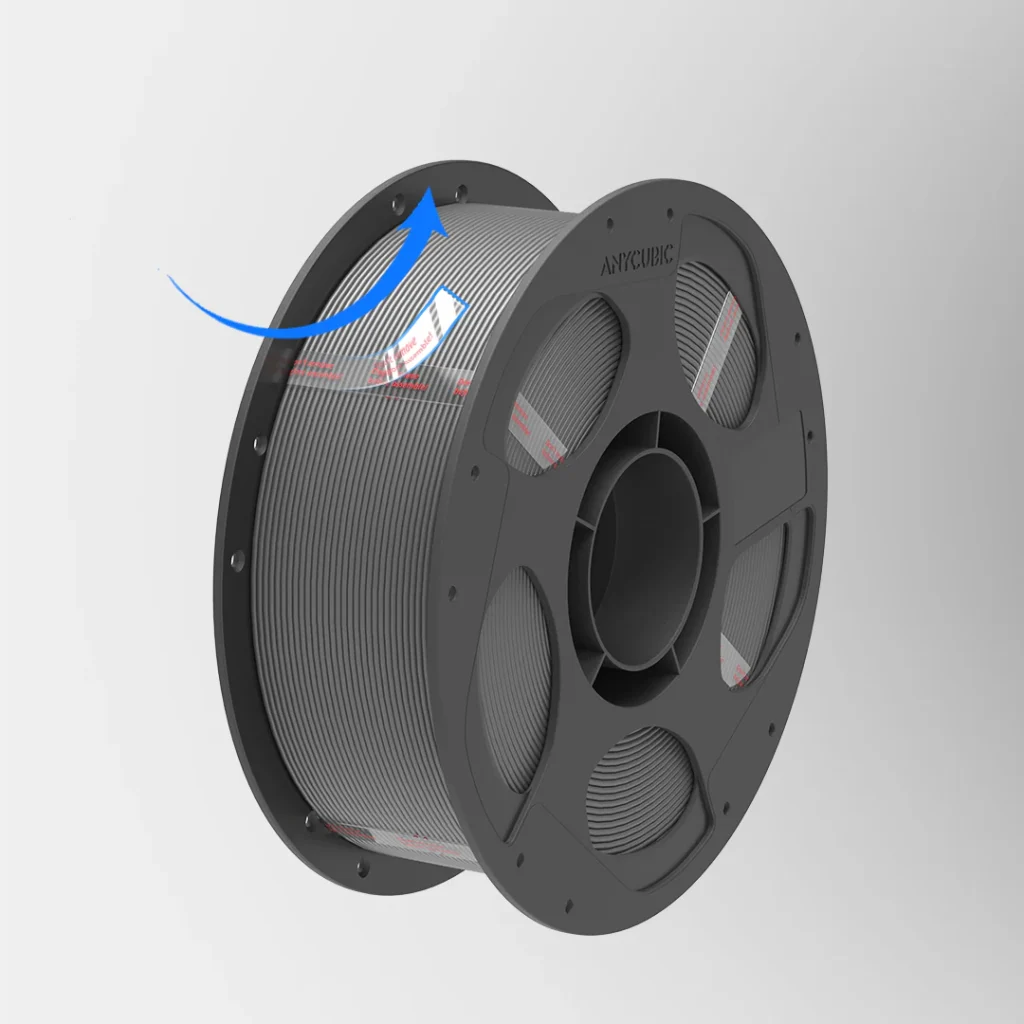
Reusable Filament Spool
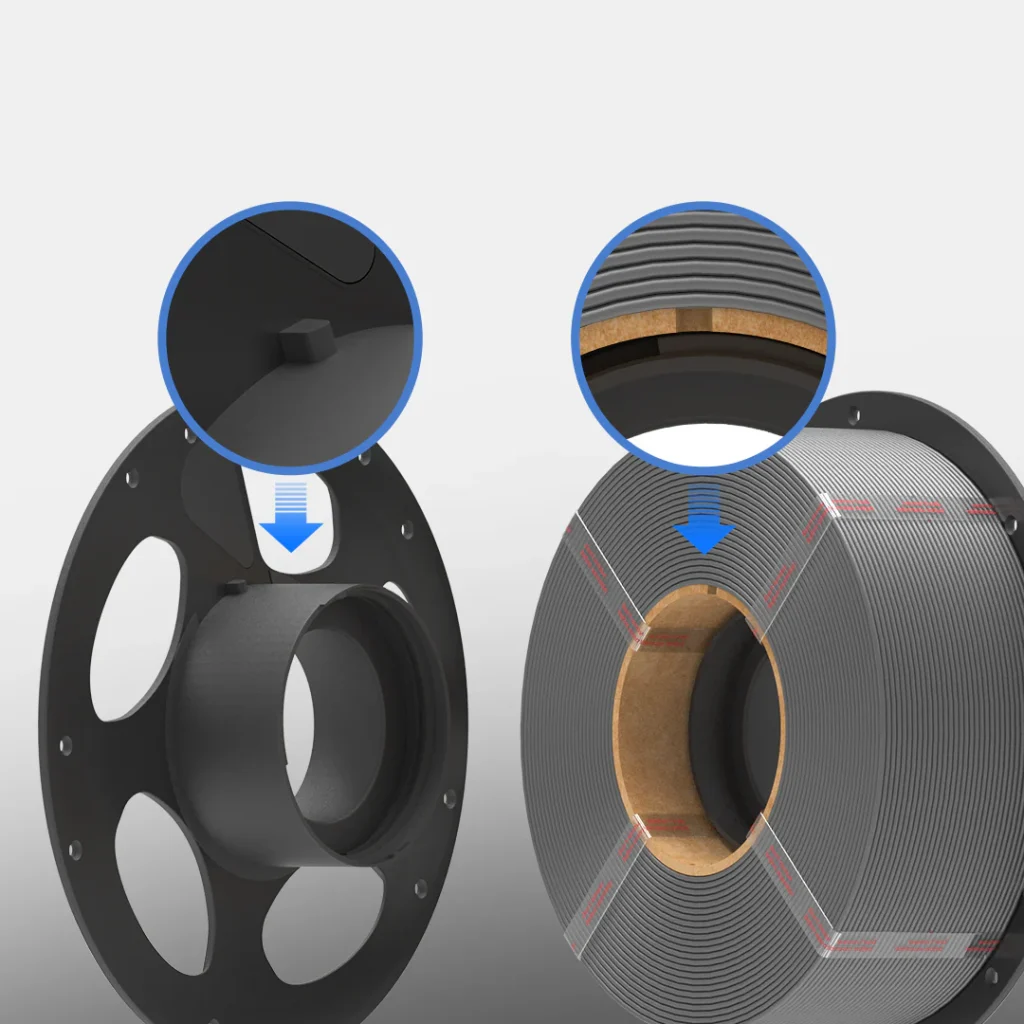
The reusable filament spool features a threaded connection system designed for enhanced stability when used with spool-free filaments. This design significantly reduces the risk of entanglement, filament scattering, and operational errors.
A Detailed Overview of Anycubic PLA Filament
1. Core Properties & Specs
Anycubic PLA is a reliable thermoplastic with a print temperature of 190–230 °C and a bed temperature of 50–60 °C (or unheated on some surfaces). Its ±0.02 mm diameter tolerance ensures steady extrusion and smooth finishes. The spools are tangle-free and reusable with refill packs, reducing waste.
2. Anycubic PLA Variants
- PLA Basic – Affordable and easy to print; ideal for education, prototypes, and casual use.
- PLA+ – Higher toughness and impact resistance for functional parts like tools or brackets.
- High-Speed PLA – Optimized for printers running at 300 mm/s+ with better melt flow and cooling.
- Specialty PLAs – Silk, Matte, Transparent, Marble, Dual-Color, and more for decorative prints.
3. Recommended Settings & Quick Fixes
Start with a nozzle temp of 200 °C and bed temp of 60 °C.
- Poor Adhesion: Re-level bed, clean surface, use glue stick if needed.
- Stringing: Increase retraction distance/speed, lower nozzle temp slightly.
- Clogs: Dry filament, do a cold pull, or replace nozzle.
- Brittle Filament: Store dry with desiccant or dry at 45–50 °C for 6–8 hrs.
Filament Installation
User Application Scenarios
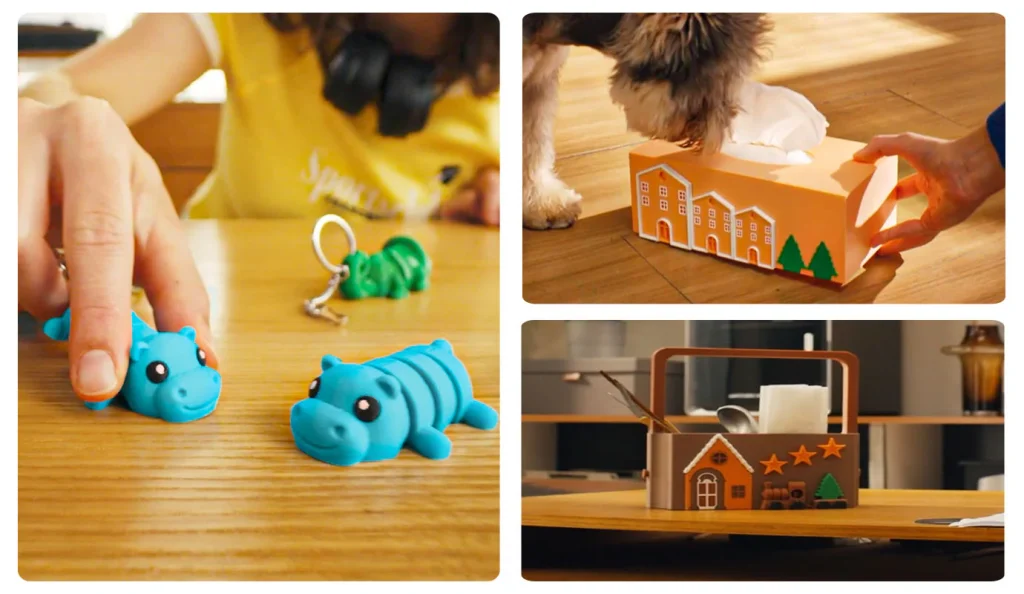
Anycubic PLA Filament: At a Glance
Pre-printing Preparation
| Drying | Suggested | Drying Conditions | 45-50℃, 6-8 h |
| ACE Pro Multicolor Filament Box | Suggested | Nozzle Size | 0.2 mm or bigger |
Recommended Settings
| Nozzle Temperature | 190-230℃ | Bed Temperature | 55-65℃ |
| Recommended Printing Speed | 50-200 mm/s | Maximum Printing Speed | 9 s |
| Maximum Volume Speed (Flow Rate) | 12 mm³ /s |
Material Performance – Physical Properties
| Density | 1.21 g/cm³ | Melt Index | 4-10 g/10 min (190℃/2.16 kg) |
| Melting Point Temperature | 162℃ | Heat Deflection Temperature(0.45 MPa) | 50℃ |
Material Performance – Mechanical Properties
| Young’s Modulus | 2560±250 MPa | Tensile Strength | 40±5 MPa |
| Elongation at Break | 12±2% | Bending Modulus | 2590±360 MPa |
| Bending Strength | 68±8 MPa | Izod Impact Strength (X-Y) | 28±1 KJ/㎡ |
| Tensile Strength (Z) | 23.8±0.4 MPa |
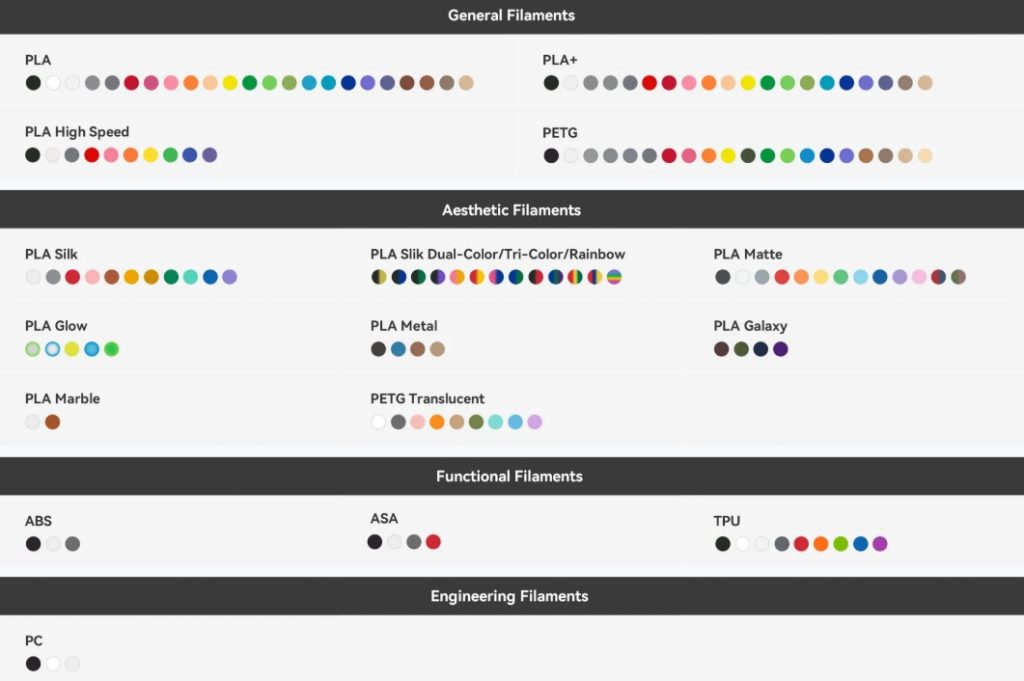
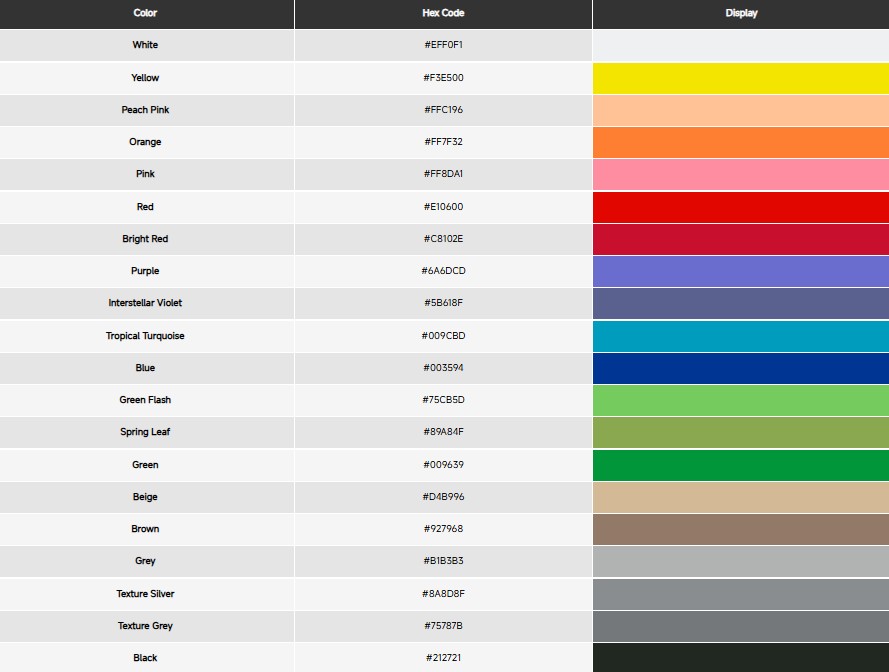
Color Type
FAQs
What is Anycubic PLA filament made of?
Anycubic PLA (Polylactic Acid) is a bioplastic derived from renewable resources such as cornstarch, sugarcane, and cassava. It is a biodegradable and environmentally friendly material.
Is Anycubic PLA compatible with my 3D printer?
Yes, Anycubic PLA filament (1.75 mm diameter) is compatible with virtually all FDM 3D printers on the market, including Creality, Prusa, Ender, and, of course, all Anycubic models.
What is the difference between Anycubic PLA and PLA+?
Anycubic PLA+ is an upgraded version of the standard PLA. It is formulated with special additives to provide significantly higher toughness and impact resistance, making it more suitable for functional parts that require durability. Standard PLA is best for general-purpose printing and aesthetic models.
How should I store Anycubic PLA filament?
PLA is hygroscopic, meaning it absorbs moisture from the air. To prevent the filament from becoming brittle and causing poor print quality, store it in a cool, dry place. Use a sealed plastic bag or container with desiccant packs to absorb any moisture.
Why is my Anycubic PLA filament stringing?
Stringing (or oozing) is a common issue that occurs when filament extrudes while the print head moves between parts. To fix it, you should:
- Increase your retraction distance and retraction speed in your slicer settings.
- Lower your nozzle temperature by 5°C increments.
Can I use Anycubic High-Speed PLA on a regular 3D printer?
Yes, you can. While High-Speed PLA is optimized for fast printing, its improved fluidity also allows it to be used on standard printers. However, you will not be able to achieve the maximum advertised speeds unless you have a high-speed printer, such as the Anycubic Kobra 2 or Kobra 3 series.
Is Anycubic PLA safe to use for food-related items?
No, 3D printed objects are generally not considered food-safe. The microscopic layers can harbor bacteria, and the plastic can leach chemicals over time. It is not recommended to use any 3D printed item for direct contact with food or beverages.
