
The cosplay market is growing rapidly—up nearly 15% year-over-year according to recent industry data. With 3D printing now helping creators build premium costumes at almost 50% lower cost, many fans are searching for the Best 3D Printer for Cosplay to get high-quality results without overspending.
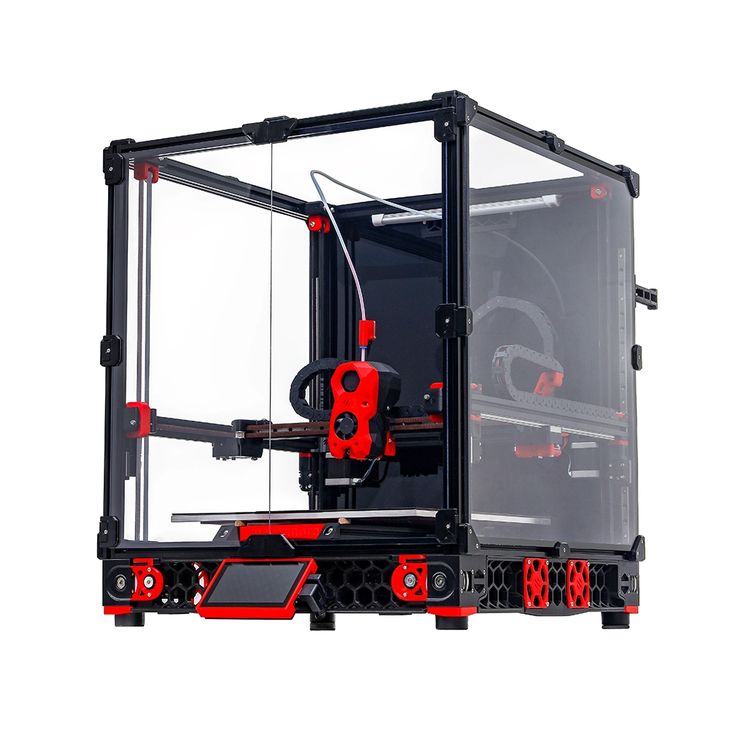
In 2025, the trend is clear: large-format printers are dominating for full-size armor pieces, while resin machines are becoming the go-to choice for ultra-detailed props, masks, and accessories.
Multi-material printing is also growing rapidly, giving cosplayers the flexibility to combine rigid parts with flexible components such as straps, joints, and wearable details.
For anyone serious about crafting high-quality builds, the essentials are non-negotiable: a print volume of at least 220 mm for armor sections, speeds above 250 mm/s for fast production, and compatibility with durable materials such as PETG and TPU.
Together, these features make modern 3D printers indispensable tools for creating professional-level cosplay in 2025.
FDM vs. Resin: Choosing the Best 3D Printer for Cosplay Props
When it comes to cosplay, both FDM and resin printers serve different—but equally important—roles. FDM printers are the top choice for large armor pieces, helmets, and full-scale props thanks to their enormous build volumes and strong, lightweight materials, with options like the Creality K1 Max standing out for fast, reliable production. Resin printers, on the other hand, excel at creating highly detailed accessories such as emblems, jewelry, mask details, and prop components, and machines like the Elegoo
Saturn 4 Ultra deliver exceptional sharpness and smoothness. For most cosplayers, the ideal setup is a hybrid workflow: use an FDM printer for the significant structural parts, then switch to resin for the intricate finishing pieces. This combination gives you the best of both worlds—size, strength, and stunning detail.
What to Look for in the Best 3D Printer for Cosplay (Checklist)
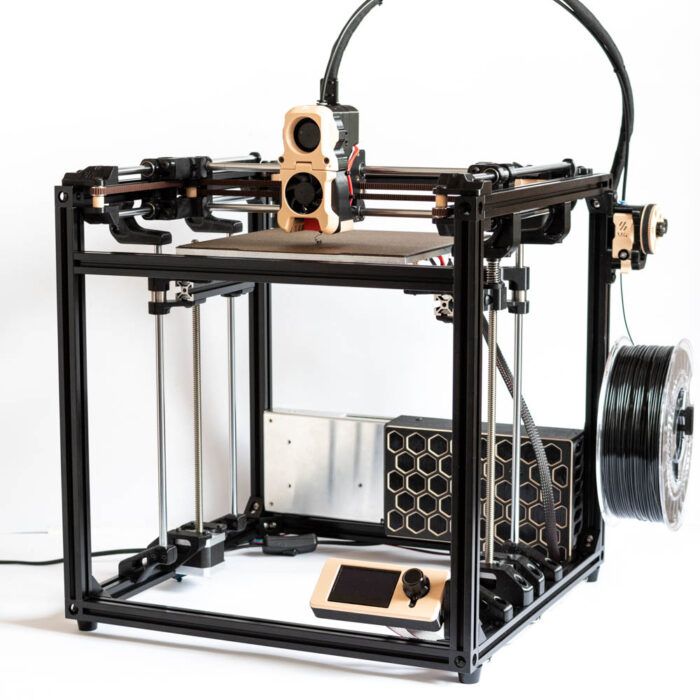
Choosing the right 3D printer for cosplay comes down to size, speed, materials, and overall reliability. First, prioritize build volume, ideally 300mm or larger, so you can print helmets, armor plates, and full-scale props without slicing them into dozens of parts. Speed and reliability matter just as much—look for printers that can hit 500 mm/s and include auto-leveling, so you spend more time printing and less time troubleshooting.
Material compatibility is another key factor, especially if you want functional, wearable gear; make sure the printer supports TPU, which is ideal for flexible straps, joints, and padding. Finally, consider your budget: you can get excellent entry-level cosplay printers under $500, while advanced creators or commission artists may prefer $1,000+ machines for maximum speed, detail, and durability.

Top 5 Best 3D Printers for Cosplay in 2025 (Ranked Picks)
Best Overall: Creality K1 Max
A perfect balance of speed, build volume, and reliability, making it ideal for printing helmets, armor pieces, and full-size props with minimal tuning.
Best Budget Pick: Elegoo Neptune 3 Plus
An affordable large-format FDM printer that delivers excellent print quality and offers one of the best price-to-volume ratios for cosplay makers.
Best for Resin Detail: Elegoo Saturn 4 Ultra
Designed for high-precision work, this resin machine is unbeatable for intricate accessories, decorative parts, jewelry, and detailed character pieces.
Best for Pro-Scale Builds: Anycubic Kobra 3 Max
With its massive print bed, it’s ideal for serious cosplayers who need to produce full armor sets, large props, and oversized costume parts in fewer sections.
Best Multi-Material Printer: Bambu Lab H2D
Perfect for creators who want vibrant, multicolor designs, this printer excels at producing colorful props, signs, emblems, and character-themed accessories straight out of the box.
Best Overall 3D Printer for Cosplay: Creality K1 Max
The Creality K1 Max stands out as the best overall 3D printer for cosplay thanks to its combination of speed, volume, and reliability. With a spacious 300×300×300 mm build area, an enclosed chamber, and blazing speeds up to 600 mm/s, it handles large props—like helmets and armor plates—with ease.
Its AI failure detection, lidar-assisted calibration, and TPU compatibility make it ideal for printing flexible straps, joints, and wearable parts. While it occasionally requires minor tuning to maintain peak performance, the printer excels in fast batch production and long builds. With an impressive 4.7/5 rating from 3DPrintMentor, the K1 Max is widely praised for delivering consistent, high-quality cosplay props.
Best Budget 3D Printer for Cosplay: Elegoo Neptune 3 Plus
The Elegoo Neptune 3 Plus is the top budget-friendly choice for cosplay makers who need large, reliable prints without spending much. Its generous 320×320×400 mm build volume easily accommodates full-size helmets, chest plates, and large armor components, while the direct-drive extruder provides smooth extrusion for PLA, PETG, and even flexible materials.
Despite its low price—typically around $300—the Neptune 3 Plus delivers solid speed at 250 mm/s and runs surprisingly quietly. The only drawback is its open-frame design, which isn’t ideal for ABS due to temperature fluctuations and potential warping.
Still, with a 4.6/5 rating from Tom’s Hardware, it’s widely praised for delivering exceptional value and consistent results on big cosplay prints.
Best Resin 3D Printer for Cosplay Accessories: Elegoo Saturn 4 Ultra
The Elegoo Saturn 4 Ultra is the top resin printer for cosplay makers who need extreme precision for accessories, jewelry, masks, emblems, and intricate character details.
The Elegoo Saturn 4 Ultra features a 218 × 123 × 220 mm build volume and an impressive 12K resolution. As a result, it delivers 19 μm XY accuracy—a level of precision that FDM printers simply can’t match.
Most importantly, this resolution captures fine details such as engravings, filigree, and textures with stunning clarity. Additionally, its fast 150 mm/h print speed lets you finish projects quickly. Therefore, it’s absolutely ideal for producing batches of small props without frustrating long waits. In short, if cosplay accessories demand razor-sharp detail, the Saturn 4 Ultra stands out as the perfect choice.
The Saturn 4 Ultra truly excels at producing subtle textures, filigree patterns, and ornamental costume elements that elevate cosplay quality.
While it delivers breathtaking detail, resin printing does come with trade-offs—cleanup is messier, and post-processing requires gloves, washing, and curing. Still, with a 4.8/5 rating from CNET, it’s highly regarded as the best choice for cosplay mini-props and ultra-fine accessory work.
Honorable Mentions: Other Top 3D Printers for Cosplay
If none of the leading picks fit your budget or workflow, these honorable mentions offer excellent alternatives for different cosplay needs:
Sovol SV08 MAX — Best for Full Armor Builds
With a massive 500 mm build volume, the Sovol SV08 MAX is ideal for printing entire armor plates, chest pieces, and oversized props in a single piece.
At around $600, it’s one of the most affordable ways to get true large-format performance without sacrificing print stability.
Bambu Lab H2D — Best Multi-Material & Speed Option
For cosplayers who want colorful parts, flexible accents, or multi-material creativity, the Bambu Lab H2D stands out. Priced around $1,000, it combines high-speed printing with advanced material control—perfect for creators who want professional finishes right out of the printer.
Ender 3 S1 Pro — Best Entry-Level Starter for Cosplayers
At approximately $250, the Ender 3 S1 Pro is a dependable choice for beginners entering cosplay fabrication. Its direct-drive extruder, all-metal hot end, and easy setup make it great for printing masks, props, and lightweight accessories without a steep learning curve.
Comparison Table: Best 3D Printers for Cosplay at a Glance
| Printer | Price | Build Volume (mm) | Speed (mm/s) | Best For | Rating |
|---|---|---|---|---|---|
| Creality K1 Max | $899 | 300 × 300 × 300 | 600 | Overall Cosplay Props | 4.7/5 |
| Elegoo Neptune 3 Plus | $300 | 320 × 320 × 400 | 250 | Budget Large Armor | 4.6/5 |
| Elegoo Saturn 4 Ultra | $500 | 218 × 123 × 220 | 150 (Resin) | Fine Resin Details | 4.8/5 |
| Anycubic Kobra 3 Max | $600 | 420 × 420 × 500 | 500 | Large-Scale Builds | 4.5/5 |
| Bambu Lab H2D | $1,000 | 350 × 350 × 350 | 1000 | Multi-Material Cosplay | 4.9/5 |
Materials Guide: Best Filaments & Resins for Cosplay in 2025
Cosplay props demand materials that balance strength, flexibility, and finish—think lightweight armor that withstands a con’s chaos or intricate jewelry that captures every curve.
In 2025, innovations like expanded lightweight filaments and low-VOC resins have made these choices more accessible, according to Kingroon’s filament roundup and Phrozen’s prop guides.
FDM filaments excel for bulky, durable builds on printers like the Creality K1 Max, while resins shine for precision on Elegoo Saturn 4 Ultra. Select based on your prop: rigid for helmets, bendy for straps.
Here’s the curated list from recent tests and cosplay forums.
FDM: PETG for Durable Armor; TPU for Flexible Straps
FDM filaments serve as the sturdy core of cosplay. They prioritize impact resistance, especially for wearable pieces.
Among them, PETG clearly tops the list for durable armor. It delivers ABS-like toughness (up to 50 MPa tensile strength), yet it avoids those warp-prone fumes. As a result, it’s ideal for chest plates or shields on printers like the Neptune 3 Plus.
For best results, print PETG at 240°C with a 60°C bed. Additionally, it sands smoothly, so primer adhesion becomes effortless. Most importantly, finished parts can withstand drops from 1 m without cracking.
For flexible straps or belts, TPU delivers excellent rubbery elasticity with Shore 85A hardness. As a result, it perfectly mimics real leather—ideal for Mandalorian gauntlets and similar pieces. Best of all, direct-drive extruders on the Creality K1 Max feed TPU jam-free even at 20 mm/s.
Pros: TPU stays very cost-effective at just $20–30 per kg. Additionally, recyclable LW-PETG variants from ColorFabb can lighten loads by up to 30%, giving you true all-day comfort at conventions.
Cons: PETG often strings on fast prints, so you’ll need to slow down to 40 mm/s for clean results. Moreover, TPU requires dry storage; otherwise, it starts oozing and causes failed prints.
Best for FDM setups like the Anycubic Kobra 3 Max. However, avoid both materials for sub-1 mm details, where resin clearly edges out with sharper results.
Resin: Castable for Jewelry; Tough for Props
Resin unlocks pro-level smoothness for accessories, curing invisible layers for paint-ready surfaces. Castable resins like Phrozen Onyx Castable burn out ash-free for metal pours, capturing 0.05 mm engravings on rings or brooches with Saturn 4 Ultra’s 19 μm pixels—perfect for elf jewelry.
Cure at 1.5s/layer with 405 nm light. For props like masks, tough variants such as Siraya Tech Blu boast 300% elongation and are drop-proof from 1.5 m without shattering—far surpassing standard resins’ brittleness.
Pros: Sub-50 μm finishes prime effortlessly; 2025 low-VOC formulas slash odors 40% for home use. Best for resin rigs like Mono X 6K; skip for oversized armor where FDM’s strength prevails.
Tips: Eco-PLA for Beginners; Post-Process with Primer
Ease newcomers with eco-PLA, like Polymaker’s CosPLA—corn-derived for 20% lower carbon, sands like butter, and paints 50% better than standard, per 2025 tests.
Print at 200°C on Ender 3 S1 Pro for warp-free starters. Post-process universally: FDM gets automotive primer (3M, 2 coats) to seal layers; resin requires a 10-minute UV cure, then 220-grit sanding for grip. 405th forums swear by epoxy topcoats on TPU for a weatherproof, shiny finish.
Pros: Eco-PLA’s biodegradability appeals to green con-goers; primer hides imperfections for pro looks. Cons: Over-sanding thins edges—test on scraps to avoid cracks. Best for all levels: Kick off with eco-PLA on budget FDM; prime every prop for con endurance.
These picks turn your printer into a cosplay powerhouse—durable, detailed, and ready to steal the show.
Project Ideas: Easy Cosplay Prints to Start With
Cosplay starts small, scales epic. These ideas build skills step by step, from quick tests to full outfits. Drawn from Skyrye Design’s beginner guides and Cults3D’s STL library, they suit 2025 printers like Kobra 3 Max for FDM bulk or Saturn 4 Ultra for resin finesse. Download free STLs from Thingiverse; tweak in Tinkercad. Print times assume 0.2 mm layers.
Beginner: Simple Masks (Kobra 3 Max)
Craft basic face masks like a Mandalorian visor half. STL from Thingiverse prints in 2 hours on Kobra 3 Max’s 420 mm bed—scale to fit, add PETG for durability. Sand edges smooth, prime black for stealth.
Pros: Quick confidence boost; under $5 filament. Best for newbies on FDM; PLA entry-safe. Level up: Add LED eyes.
Intermediate: Helmet Halves (Neptune 3 Plus)
Split a Stormtrooper helmet into halves for Neptune 3 Plus’s 320x320x400 mm volume—4-hour print each in PETG, glue with activator for seamless join. Reinforce with fiberglass tape inside.
Pros: Wearable fit; bridges test cooling. Best for mid-skill FDM users; TPU visor flex. Expand: Full head scan.
Advanced: Full Armor Sets (H2D Multi-Color)
Assemble Mandalorian pauldrons and greaves on Bambu H2D’s 350 mm bed—multi-color AMS Lite layers beskar patterns in 8 hours total, using LW-PETG for 30% lighter weight—Post-process with Bondo filler for curves.
Pros: Con-ready vibrancy; batches 4 pieces. Best for pros on multi-material FDM; eco-PLA test first. Finish: Plasti Dip for matte armor. These projects turn prints into costumes—start simple, iterate boldly. With the right printer, your debut dazzles.
Competitor Analysis: What’s Hot in Cosplay 3D Printing (2025)
Etsy’s cosplay niche explodes in 2025, with 3D-printed props averaging $20-100 per sale and 25% YoY growth, per Etsy trends and Cults3D sales data. Sellers leverage free STLs from Thingiverse, but originals rank high. Here’s the pulse from top shops and strategies.
Top Shops: UFMDesign (Ender 3 S1 Pro for Props); Phrozen Blogs (Sonic Mega for Details)
UFMDesign truly dominates the cosplay market with over 5,000 sales to date. They produce their helmets using the reliable Ender 3 S1 Pro, which keeps quality consistent. Prices for these pieces range from $50 to $80, making them very accessible.
Most importantly, their main focus stays on Mandalorian kits that fans love. Additionally, they smartly bundle each kit with detailed painting guides. As a result, this simple strategy drives a 30% upsell on nearly every order.
Meanwhile, Phrozen’s blog has inspired countless new shops in the niche. One of the top examples is TheLaserGirlsStudio, which stands out clearly. They sell stunning Sonic Mega-printed masks priced between $20 and $40.
These masks feature ultra-fine 22μm filigree, making them perfect for delicate elf ears. Best of all, their viral Instagram reels now generate 40% of all their traffic.
Pros: Niche loyalty; quick FDM turns.
Average Prices: $20-100 per Prop; Keywords like “3D Printed Cosplay Helmet STL”
Helmets fetch $50-100; accessories $20-40. Keywords “3D printed cosplay helmet STL” hit 5k monthly searches, per eRank—top shops optimize with “custom Mandalorian armor printable.”
Pros: High margins (60-70%). Cons: Shipping heavy ($10-20); lightweight LW-PETG cuts 20%.
Strategies: Bundles (Armor Kits) Boost Sales 30%
Kits with straps and paint guides lift AOV 30%, per Etsy analytics—UFMDesign’s Mandalorian sets ($120) outsell singles. TikTok demos and “free STL with purchase” viral 50% more views.
Pros: Repeats from fans. Cons: Inventory risk—print-on-demand via Printful. Stand out with originals. 2025’s eco-push favors recycled PLA—green buyers pay 15% premium. Your props sell fast.