
3D printing has revolutionized how we create, innovate, and solve problems. In the USA, its popularity continues to soar, with hobbyists and businesses alike embracing this technology. From crafting intricate DIY projects to manufacturing custom parts for industries, 3D printing offers endless possibilities — especially when users compare materials like PLA vs ABS vs PETG to choose the right filament for their needs.
However, the success of any 3D print depends heavily on the filament you choose. The right filament can mean the difference between a flawless print and a frustrating failure. With so many options available, it can be overwhelming to decide which one suits your needs—especially if you’re also searching for the best 3D printer for small business setups that demand consistent, high-quality results.
What Are 3D Printing Filaments?
3D printing filaments are the essential materials used in FDM (Fused Deposition Modeling) 3D printers. Think of them as the “ink” for your 3D printer. These filaments are long, thin strands of thermoplastic material wound onto spools, ready to be fed into the printer’s extruder.
When heated, the filament melts and is extruded through a nozzle to create objects layer by layer. The process is precise, allowing for the creation of intricate designs and functional parts.
Why Are Filaments Important?
Each filament type has unique properties, making it suitable for specific projects. For example:
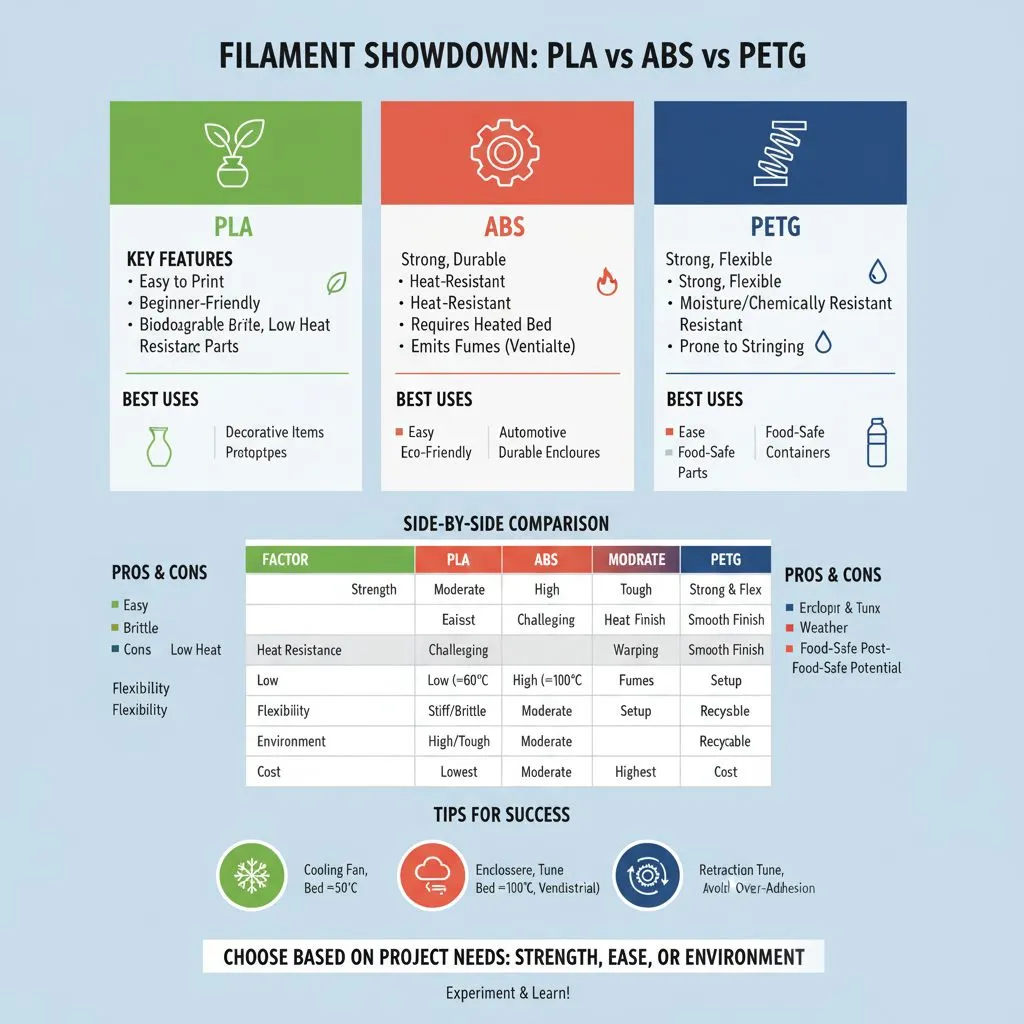
- PLA is beginner-friendly and eco-friendly.
- ABS is durable and heat-resistant.
- PETG offers a balance of strength and flexibility.
Choosing the right filament depends on your project’s needs, such as strength, flexibility, or environmental resistance.
Overview of PLA, ABS, and PETG
PLA (Polylactic Acid)
PLA is the most beginner-friendly filament, widely used for its ease of printing and eco-friendliness. It is derived from renewable resources like corn starch or sugarcane, making it biodegradable under specific conditions. PLA prints at low temperatures and doesn’t require a heated bed, making it ideal for hobbyists and newcomers. However, it lacks durability and heat resistance, making it unsuitable for functional or outdoor parts.
Key Features:
- Easy to print with minimal warping.
- Biodegradable and environmentally friendly.
- Brittle and less durable compared to other filaments.
- Best for decorative items, prototypes, and low-stress applications.
ABS (Acrylonitrile Butadiene Styrene)
ABS is a durable, heat-resistant filament often used for functional parts. It is known for its toughness and impact resistance, making it suitable for industrial and automotive applications. However, ABS requires a heated bed and an enclosed printing environment to prevent warping. It also emits fumes during printing, so good ventilation is essential.
Key Features:
- Strong and impact-resistant.
- Withstands higher temperatures than PLA.
- Requires a heated bed and controlled environment.
- Best for functional parts, automotive components, and prototypes.
PETG (Polyethylene Terephthalate Glycol)
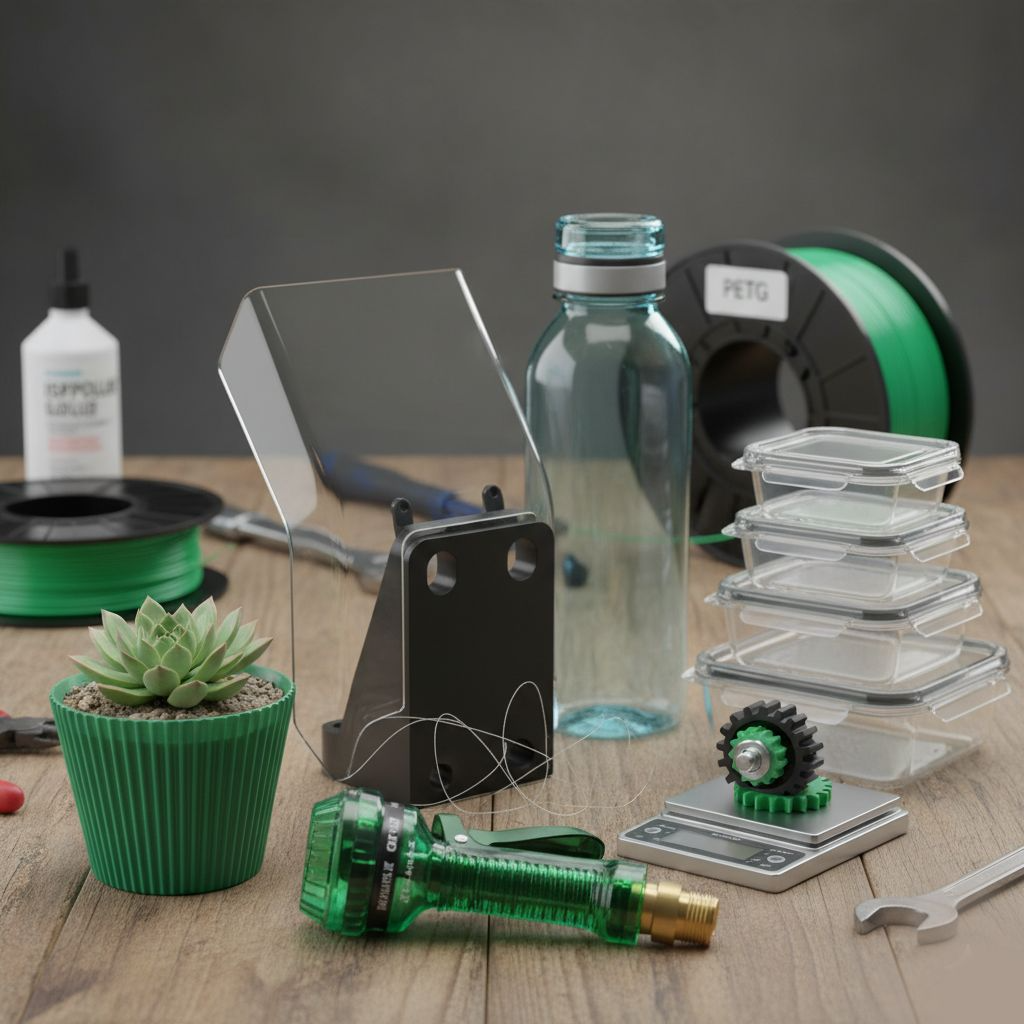
PETG strikes a balance between PLA and ABS, offering strength, flexibility, and ease of use. It is less brittle than PLA and more durable, making it suitable for functional parts. PETG is also moisture- and chemical-resistant, making it ideal for outdoor and food-safe applications. However, it can be prone to stringing during printing.
Key Features:
- Strong, flexible, and durable.
- Resistant to moisture and chemicals.
- Easier to print than ABS but requires fine-tuning.
- Best for outdoor items, food-safe containers, and functional parts.
Key Factors to Consider When Choosing a Filament
When selecting a 3D printing filament, understanding the unique properties of each material is crucial. PLA, ABS, and PETG are the most popular options, each excelling in different areas. Here’s a breakdown of the key factors to consider:
1. Strength and Durability
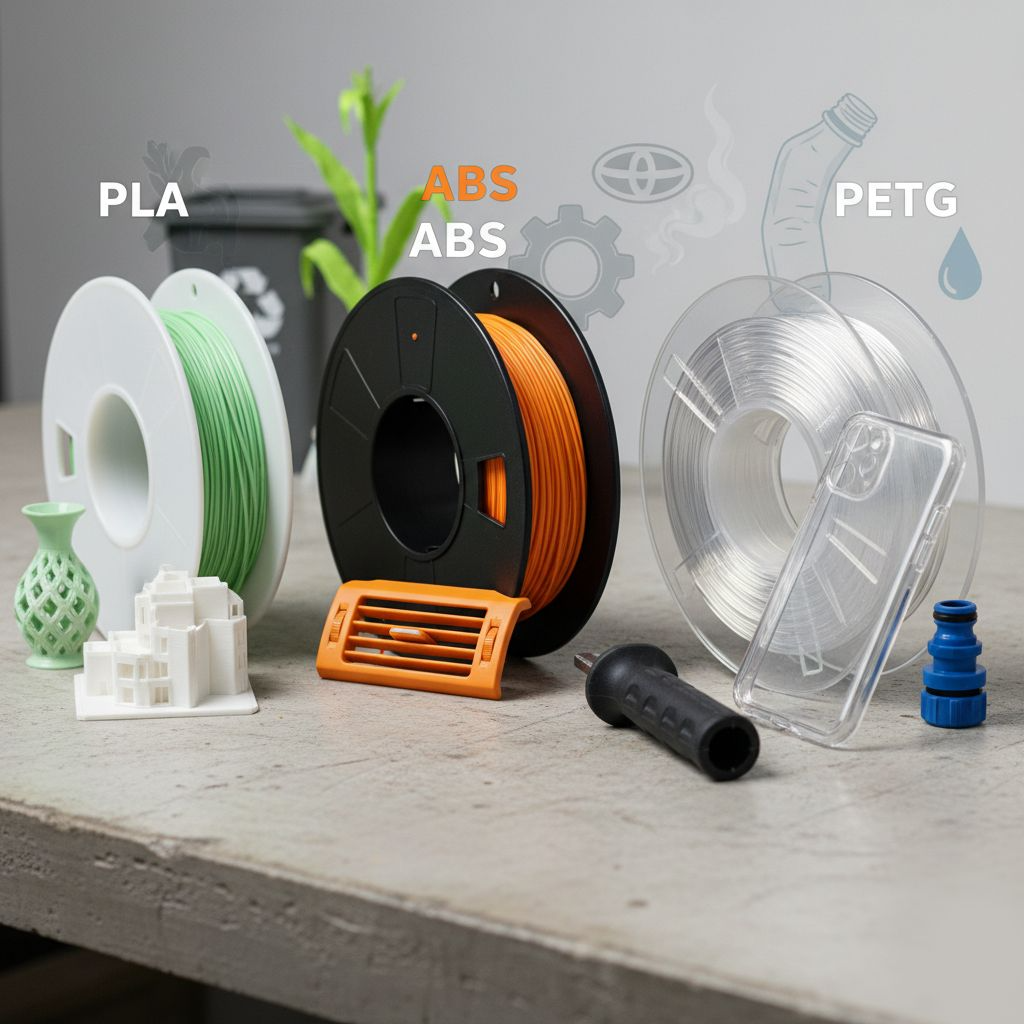
- PLA: Offers moderate strength but is brittle. It’s suitable for lightweight, non-functional parts like decorative items or prototypes.
- ABS: Known for its toughness and impact resistance. It’s ideal for functional parts that need to endure stress, such as automotive components or tools.
- PETG: Combines strength and flexibility. It’s less brittle than PLA and more durable than ABS, making it perfect for outdoor or functional parts.
2. Ease of Use
- PLA: The easiest filament to print with. It requires low temperatures, has minimal warping, and adheres well to most surfaces. Perfect for beginners.
- ABS: More challenging due to its tendency to warp and emit fumes. It requires a heated bed and an enclosed printer for best results.
- PETG: A middle ground. It’s easier to print than ABS but requires fine-tuning to avoid stringing. It adheres strongly to the print bed, so removal can be tricky.
3. Heat Resistance
- PLA: Has the lowest heat resistance, softening at around 60°C. Not suitable for high-temperature environments.
- ABS: Excels in heat resistance, withstanding up to 100°C. Ideal for parts exposed to heat, like car interiors.
- PETG: Offers moderate heat resistance, around 80°C. Suitable for applications requiring some thermal stability.
4. Flexibility
- PLA: Stiff and brittle, with minimal flexibility. Best for rigid parts.
- ABS: Offers moderate flexibility, making it resistant to impacts and bending.
- PETG: Highly flexible and tough. It can bend without breaking, making it ideal for parts requiring durability and slight give.
5. Environmental Impact
- PLA: The most eco-friendly option. It’s biodegradable and made from renewable resources, such as cornstarch. However, it requires industrial composting to break down.
- ABS: Petroleum-based and non-biodegradable. Recycling is possible but not widely accessible.
- PETG: Recyclable but not biodegradable. Some brands offer PETG made from recycled materials, making it a more sustainable choice than ABS.
6. Cost
- PLA: The most affordable and widely available filament. An excellent choice for budget-conscious projects.
- ABS: Slightly more expensive than PLA but still cost-effective for functional parts.
- PETG: Typically priced higher than PLA and ABS. Its durability and versatility justify the cost for demanding applications.
Choosing the right filament depends on your project’s requirements. For beginners or decorative prints, PLA is the go-to option. ABS is best for durable, heat-resistant parts, while PETG offers a balance of strength, flexibility, and ease of use. Consider these factors to ensure your prints meet your expectations.
PLA: Pros, Cons, and Best Uses
Advantages of PLA
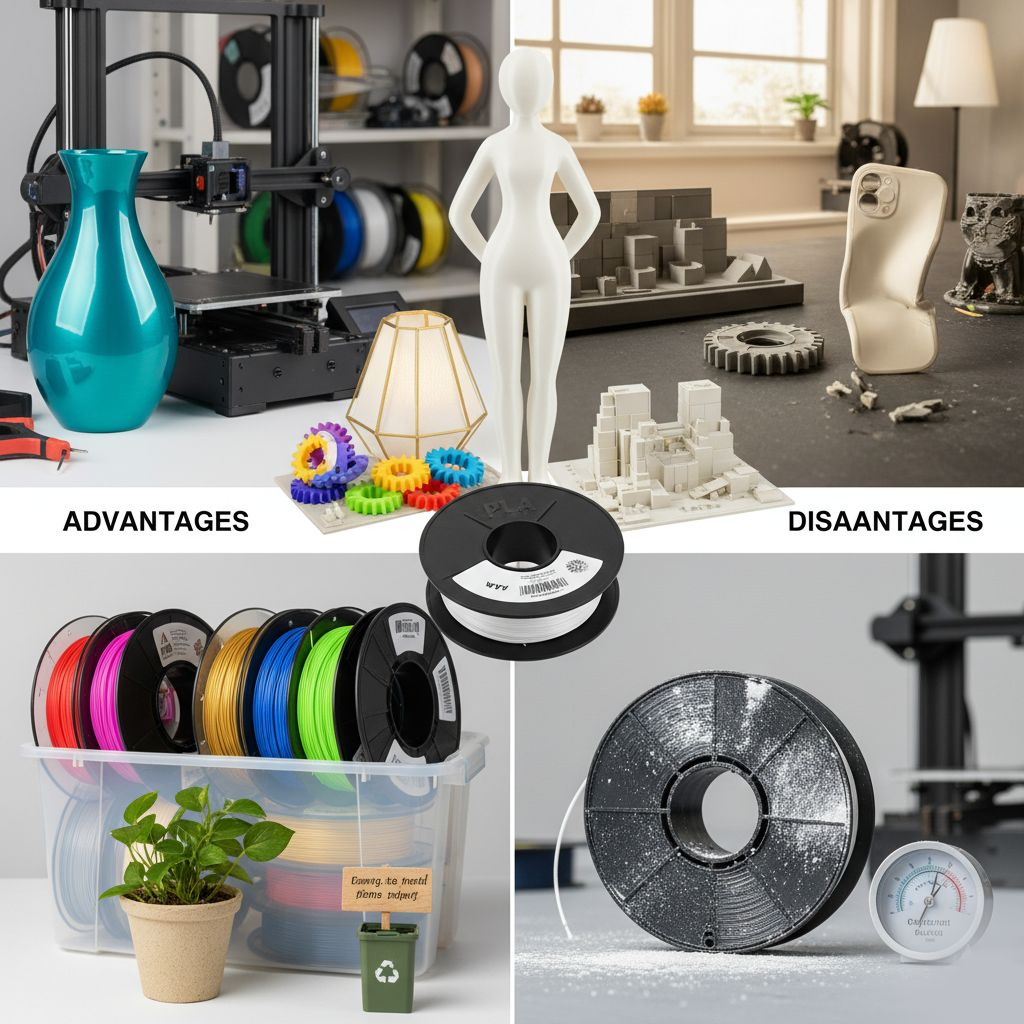
- Easy to Print
PLA is one of the most beginner-friendly filaments. It prints smoothly at lower temperatures and doesn’t require a heated bed. This makes it ideal for hobbyists and those new to 3D printing. - Low Warping
Unlike other filaments, PLA is less prone to warping. This ensures better adhesion to the print bed and more consistent results. - Eco-Friendly
Made from renewable resources like corn starch or sugarcane, PLA is biodegradable under industrial composting conditions. It’s a sustainable choice for environmentally conscious users. - Wide Variety of Colors and Finishes
PLA is available in a broad range of colors, including translucent and glossy finishes. This makes it perfect for aesthetic projects and decorative items.
Disadvantages of PLA
- Brittle and Less Durable
PLA lacks flexibility and can break under stress. It’s not suitable for parts that need to endure mechanical strain or impact. - Low Heat Resistance
PLA softens at temperatures above 60°C (140°F). This limits its use for outdoor applications or items exposed to heat. - Moisture Sensitivity
PLA absorbs moisture from the air, which can degrade its quality over time. Proper storage in a dry environment is essential.
Best Uses for PLA
- Beginners: Its ease of use makes it the go-to filament for those starting with 3D printing.
- Decorative Items: Ideal for creating vases, figurines, and other aesthetic objects.
- Prototypes: PLA’s affordability and ease of printing make it perfect for quick prototyping and concept models.
PLA is a versatile filament that balances affordability, ease of use, and eco-friendliness. While it’s not the strongest or most heat-resistant material, it shines in applications where aesthetics and simplicity are key.
ABS: Pros, Cons, and Best Uses
Advantages
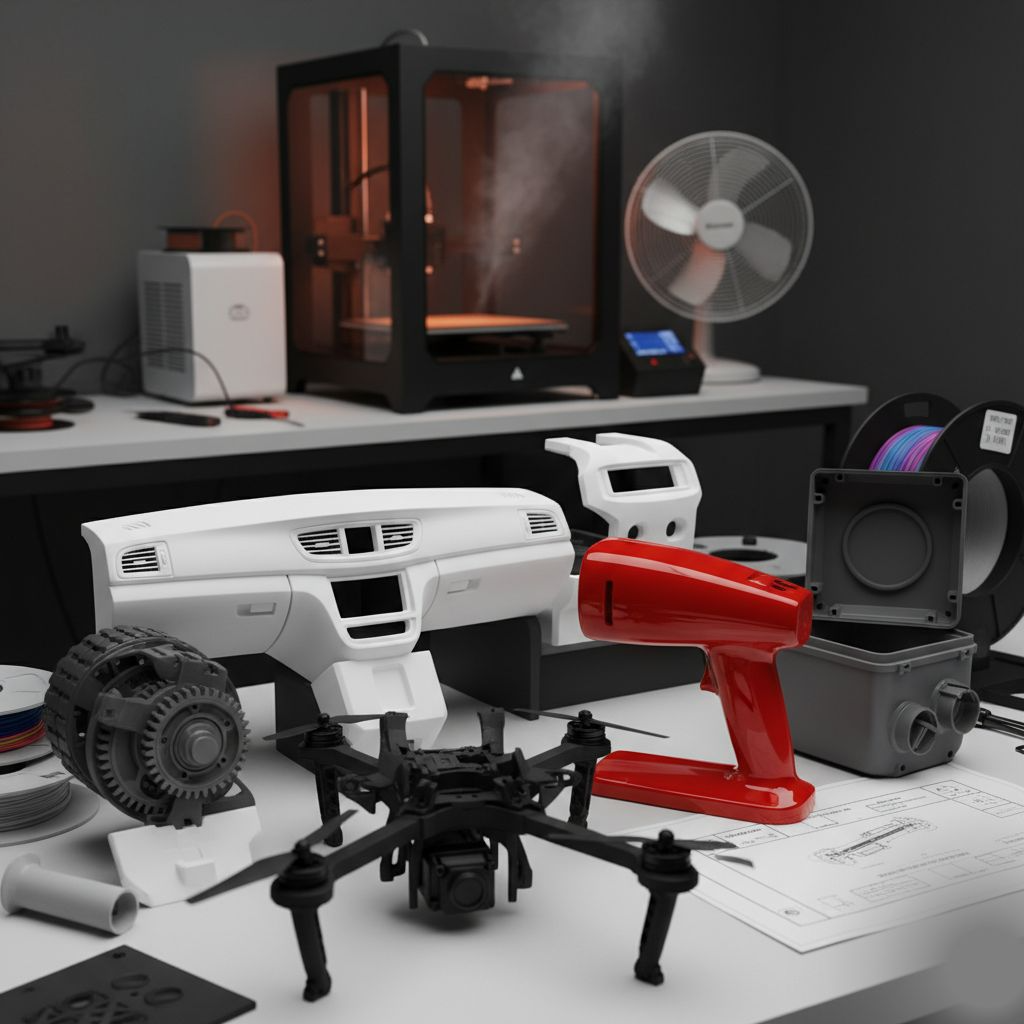
- Strong and Durable: ABS is known for its toughness, making it ideal for parts that need to withstand wear and tear. It’s less brittle than PLA and can handle impacts effectively.
- Heat-Resistant: With a high glass transition temperature, ABS can endure higher temperatures without deforming, making it suitable for functional parts exposed to heat.
- Smooth Finish: ABS prints can be sanded, painted, or polished with acetone for a professional, glossy look.
- Affordable: It’s a cost-effective option for durable and functional 3D prints.
Disadvantages
- Requires a Heated Bed and Controlled Environment: ABS tends to warp and crack as it cools. A heated bed (95–110°C) and an enclosed chamber are essential to maintain consistent temperatures.
- Emits Fumes During Printing: ABS releases styrene fumes, which can irritate the eyes and respiratory system. Proper ventilation or air filtration is necessary.
- Prone to Warping: Without the proper setup, prints may shrink or detach from the bed, leading to dimensional inaccuracies.
Best For
- Functional Parts: Ideal for mechanical components, enclosures, and items that need to endure stress or heat.
- Automotive Components: Frequently used for dashboards, brackets, and other car parts.
- Industrial Use: Suitable for prototypes and end-use parts in demanding environments.
By understanding its strengths and limitations, ABS can be a powerful material for creating durable and heat-resistant 3D prints. With the right setup, it’s a go-to choice for professionals and hobbyists alike.
PETG: Pros, Cons, and Best Uses
Advantages of PETG
- Strong and Flexible
PETG strikes a balance between strength and flexibility. It’s less brittle than PLA and more durable than ABS, making it ideal for functional parts that need to withstand stress. - Resistant to Moisture and Chemicals
PETG is highly resistant to water and most chemicals, making it suitable for outdoor applications and environments with frequent moisture. - Easier to Print Than ABS
Unlike ABS, PETG doesn’t warp as much and adheres well to the print bed. It also produces minimal odor during printing, making it more user-friendly. - Food-Safe Potential
PETG is often considered food-safe, provided it’s printed with a stainless-steel nozzle and coated with a food-safe epoxy to prevent bacterial growth in the layers.
Disadvantages of PETG
- Prone to Stringing
PETG tends to produce stringing and oozing during printing, especially if retraction settings aren’t optimized. This can affect the final print’s appearance. - Slightly More Expensive Than PLA
While PETG is affordable, it’s generally pricier than PLA, which might be a consideration for budget-conscious users. - Challenging Post-Processing
PETG is harder to paint or sand than ABS, limiting its use in projects that require extensive post-processing.
Best Uses for PETG
- Outdoor Items
Thanks to its UV and moisture resistance, PETG is ideal for outdoor applications such as garden tools, planters, and protective covers. - Functional Parts
Its strength and flexibility make it ideal for mechanical components, brackets, and machine guards. - Food-Safe Applications
PETG is commonly used for food containers, water bottles, and kitchen items, provided proper precautions are taken during printing.
This section provides a clear, concise comparison of PETG’s strengths, weaknesses, and ideal applications, making it easier for readers to decide whether it’s the right filament for their needs. Let me know if you’d like to refine or expand on any part!
Side-by-Side Comparison Table
Create a table comparing PLA, ABS, and PETG based on:
| Property | PLA | ABS | PETG |
|---|---|---|---|
| Strength | Moderate tensile strength, brittle under impact. | High impact resistance, durable under stress. | Strong and flexible, with excellent impact resistance. |
| Durability | Brittle, not suitable for high-stress applications. | Tough and long-lasting, ideal for functional parts. | Durable and resistant to wear, suitable for outdoor use. |
| Heat Resistance | Low (~55-60°C), deforms in heat. | High (~100-105°C), withstands higher temperatures. | Moderate (~70-80°C), performs well in moderate heat. |
| Ease of Use | Very easy to print, beginner-friendly. | Challenging to print, requires a heated bed and enclosure. | Easy to moderate, requires fine-tuning for optimal results. |
| Cost | Affordable and widely available. | Moderately priced, slightly more expensive than PLA. | Slightly higher cost than PLA, but offers better durability. |
| Environmental Impact | Biodegradable under industrial conditions, eco-friendly. | Petroleum-based, non-biodegradable, emits VOCs during printing. | Recyclable, less eco-friendly than PLA but better than ABS. |
How to Choose the Right Filament for Your Needs
For Beginners: Start with PLA
- Why PLA?
PLA (Polylactic Acid) is the easiest filament to work with, making it perfect for beginners. It prints at low temperatures (190–230°C) and doesn’t require a heated bed.- Advantages: Minimal warping, wide availability, and eco-friendly (biodegradable).
- Best For: Prototypes, decorative items, and low-stress applications.
- Pro Tip: Store PLA in a dry place to avoid moisture absorption, which can affect print quality.
For Functional Parts: Consider ABS or PETG
- ABS (Acrylonitrile Butadiene Styrene)
ABS is strong, durable, and heat-resistant (~100°C). It’s ideal for parts that need to withstand stress or high temperatures.- Challenges: Requires a heated bed (80–100°C) and emits fumes during printing, so proper ventilation is essential.
- Best For: Automotive parts, enclosures, and mechanical components.
- PETG (Polyethylene Terephthalate Glycol)
PETG combines the strength of ABS with the ease of PLA. It’s durable, flexible, and resistant to chemicals.- Advantages: Minimal warping, no toxic fumes, and excellent layer adhesion.
- Best For: Functional prototypes, mechanical parts, and items exposed to moderate stress.
For Outdoor or Food-Safe Items: PETG is Ideal
- Why PETG?
PETG is UV-resistant and better withstands outdoor conditions than PLA or ABS. It’s also considered food-safe when printed with the proper settings and materials.- Best For: Outdoor fixtures, garden tools, and food-related items like containers or molds.
- Pro Tip: Use a stainless steel nozzle for food-safe prints and apply a food-grade coating for added safety.
4. Match the Filament to Your Project’s Requirements
- Strength and Durability: For high-stress applications, choose ABS or PETG.
- Ease of Use: If you’re new to 3D printing, stick with PLA.
- Environmental Conditions: For outdoor use, PETG or ASA (a UV-resistant alternative) is recommended.
- Printer Capabilities: Ensure your printer supports the required temperatures and features (e.g., heated bed for ABS).
5. Experiment and Learn
- Start with PLA to build confidence.
- Gradually explore ABS and PETG as you gain experience.
- Always consider the specific needs of your project and your 3D printer’s capabilities.
Tips for Printing with Each Filament
Tips for Printing with PLA
- Use a Cooling Fan: PLA benefits from active cooling. Set the fan to 100% after the first layer to solidify layers quickly and improve print quality.
- Optimize Extruder Temperature: Start at 200°C and adjust in 5°C increments to find the ideal temperature for your specific PLA brand.
- Bed Adhesion: Use a heated bed at 45-60°C for better adhesion. Surfaces like glass, PEI, or painter’s tape work well.
- Prevent Oozing: Fine-tune retraction settings to reduce stringing and blobs during travel moves.
- Avoid High Temperatures: PLA softens at 50-60°C, so avoid using it for parts exposed to high temperatures, such as car interiors.
Tips for Printing with ABS
- Print in a Ventilated Area: ABS emits fumes during printing. Use a well-ventilated space or a printer with a HEPA filter.
- Use an Enclosure: Maintain a stable temperature around the print to prevent warping and layer separation.
- Heated Bed: Set the bed temperature to 95-110°C to ensure proper adhesion and reduce warping.
- Surface Adhesion: Apply ABS slurry (a mix of ABS and acetone) or use Kapton tape for better bed adhesion.
- Control Warping: For large prints, add a brim or raft to anchor the part and prevent lifting at the edges.
Tips for Printing with PETG
- Adjust Retraction Settings: PETG is prone to stringing. Reduce retraction distance and speed to minimize this issue.
- Moderate Cooling: Use a fan at 30-50% to balance layer adhesion and cooling. Avoid excessive cooling to prevent warping.
- Bed Temperature: Set the bed to 70-90°C for optimal adhesion. Use a glue stick or painter’s tape to prevent PETG from bonding too strongly to the bed.
- Extruder Temperature: Print at 220-250°C, depending on the brand. Higher temperatures improve flow but may increase stringing.
- Avoid Over-Adhesion: PETG can stick too well to some surfaces. Use a release agent, such as glue, to make part removal easier.
Conclusion
PLA, ABS, and PETG each bring unique strengths to 3D printing. PLA is beginner-friendly, eco-conscious, and great for decorative or low-stress prints. ABS offers superior durability and heat resistance, making it ideal for functional parts. PETG strikes a balance between strength, flexibility, and weather resistance, making it perfect for outdoor or versatile applications.
Frequently Asked Questions (FAQs):
Which filament is best for beginners?
PLA is the easiest to use, with low printing temperatures, minimal warping, and excellent bed adhesion, making it perfect for beginners.
Which filament is the most durable?
ABS is the most durable and impact-resistant, while PETG offers a balance of strength and flexibility. PLA is less durable and more brittle.
Which filament is best for outdoor use?
PETG is the best choice for outdoor applications due to its UV and moisture resistance. ABS can work but may degrade over time, while PLA is unsuitable for outdoor use.
How do I prevent warping with ABS?
Use a heated bed (90-110°C), an enclosure to maintain temperature, and adhesives such as ABS slurry or Kapton tape to improve bed adhesion.
Is PETG food-safe?
PETG is often considered food-safe, but ensure the filament is certified, and avoid contamination from non-food-safe printer components.